Prevention and Control Measures for Feather Pecking and Cannibalism in Duck Flocks: Water Supply, Feed Supply, Deworming, and Disease Prevention
1. Ration feeding should be reasonably balanced. Feed a complete, balanced feed; while ensuring adequate nutritional content, reduce the amount of plant-based protein feed, increase the proportion of animal-based protein feeds such as fish meal and meat-and-bone meal, appropriately increase the proportion of high-fiber feeds such as wheat bran, add vitamins and minerals, and provide high-quality litter that encourages ducks to peck at the ground.
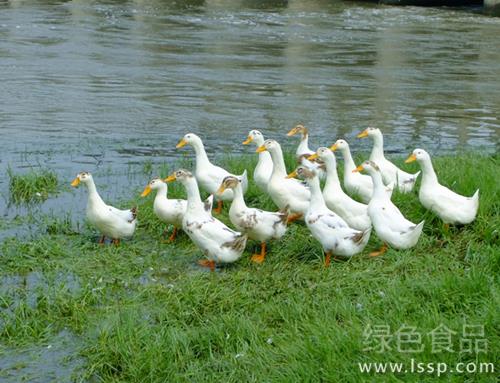
Duck flock
2. Water and feed supply. It is best to use pelleted feed instead of powdered feed, so as to avoid waste and effectively prevent feather pecking caused by hunger in ducks. Feed at fixed quality, fixed quantity and fixed times, and keep clean drinking water in the troughs at all times. Ensure there are enough trough spaces for eating and drinking, maintain the established feeding routine, and avoid competition for trough space.
3. Never feed moldy feed. Duck dermatitis and paralysis caused by moldy feed often trigger mutual pecking, so providing domestic ducks with clean and hygienic mixed feed and ensuring the cleanliness of feed troughs, drinking water and litter helps reduce the occurrence of mutual pecking.
4. Deworm regularly. This includes the removal of both internal and external parasites, so as to avoid difficulty in treatment once feather pecking occurs.
5. Isolate and raise separately. If feather pecking occurs, immediately separate the pecked ducks and raise them apart, and apply a layer of machine oil, kerosene or other substances with an unpleasant odor to the wounds, to prevent this duck from being pecked again and also to prevent mutual pecking in the flock. Alternatively, paste red paper over the doors and windows of the duck house or cover them with black cloth, and replace the indoor light bulbs with red bulbs, etc. The feather pecking will gradually lessen, and then normal raising can be resumed.
6. Improve the feeding and management environment. Keep the duck house well ventilated; maintain moderate stocking density; keep the temperature suitable and cool down when the weather is hot; light should not be too strong, and it is best to coat door and window glass and light bulbs with red, blue or blue-green colors, etc. All of these can effectively prevent the occurrence of feather pecking.
7. Divide into groups. Group by male and female, strong and weak, large and small, and by different breeds. Isolate sick ducks at any time, and promptly cull ducks that specialize in pecking other ducks, as well as sick ducks that are difficult to cure.
8. Try to distract the ducks. To change an already formed bad habit, set up sand bathing pits, straw bundles, or hang wild grass, green vegetables, etc. in the area, and try to entice the ducks to move around more, so as to distract them and help them restore normal physiological functions.
9. Prevent external injuries. Any object that ducks can come into contact with should not have sharp protruding points, to prevent injury to the ducks' bodies.
10. Reduce various stress factors. The duck house should be well ventilated, eliminate various noise disturbances, avoid strong light exposure and high temperatures, and create a quiet and comfortable environment for the ducks. Chlorpromazine, diazepam, etc. can also be mixed into feed or drinking water for 5 consecutive days.
11. Persist in regular disinfection to reduce the occurrence of various diseases. During the course of illness in ducks, strengthen management, treat promptly, and improve the ducks' disease resistance.
12. Collect eggs frequently and supplement with shell powder at the same time. If only a few individual ducks have a long-term habit of egg pecking, they should be resolutely culled to prevent other ducks from imitating them and causing the habit to spread.
13. Purify pullorum disease and prevent the occurrence of pullorum disease in ducks; select appropriate anticoccidial drugs to prevent and control duck coccidiosis; prevent physiological and pathological prolapse of the cloaca, and promptly isolate and handle ducks with prolapse of the cloaca.