Late-Autumn Beekeeping Precautions: Managing Colonies for Safe Overwintering
When late autumn arrives, the hundred flowers fade, the bees' foraging work becomes relatively idle, and they begin preparing for overwintering. At this time the beekeeper's workload decreases, but management of the bees must not be relaxed. Pay attention to ten "preventions":
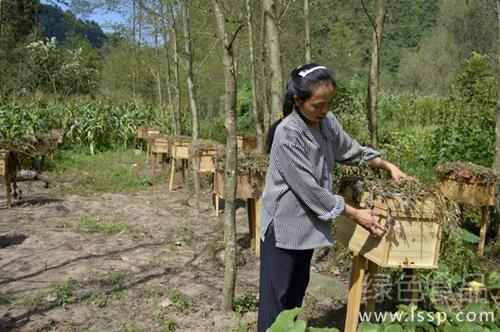
Beekeeping
1 Prevent natural swarming:
An aging queen, an oversized colony, excessively high nest temperature, and honey-and-pollen combs compressing the brood combs can all cause bees to swarm naturally. In terms of management, old workers should be replaced in time, nest temperature adjusted, and large colonies adjusted; combs can be added to expand the nest or swarming can be controlled artificially.
2 Prevent robbing:
A lack of honey and pollen sources triggers robbing. Once robbing occurs and is not stopped in time, colonies will rob and kill one another; in mild cases the stored honey is plundered clean, and in severe cases the queen is balled and killed, causing the colony to abscond or be destroyed. In serious cases, the whole apiary robs one another, causing great losses. Therefore robbing must be strictly prevented, mainly by maintaining strong colonies, sufficient honey, tightly sealed hives, and appropriately narrowed entrances and bee ways.
3 Prevent feed shortage:
In late autumn, external honey and pollen are scarce and the temperature is relatively high, so bees still go out to forage, and large amounts of stored honey are consumed, easily leading to insufficient feed and robbing, resulting in an insufficient number of overwintering bees; in severe cases it triggers colony absconding or starvation. Therefore, before overwintering, supplement enough honey and pollen in time.
4 Prevent and treat bee mites:
The growth and decline pattern of bee mites is negatively correlated with colony strength: that is, as colony strength rises, the mite infestation rate falls; conversely, when colony strength falls, mites increase. In autumn colony strength declines and mites increase, so mites must be thoroughly controlled; otherwise colony mortality will be high and mite infestation will develop quickly the following year. Mite treatment can be carried out before rearing overwintering bees and after the natural brood break.
5 Prevent colonies from being too weak:
In autumn, weak colonies find it hard to overwinter safely, so for small, weak colonies measures such as merging and supplementing brood combs can be taken to ensure safe overwintering.
6 Prevent colony queen loss:
A queen killed because of robbing or a new queen lost during mating is unfavorable for rearing overwintering bees. Therefore, inspections should be strengthened; once a queenless colony is found, it must be adjusted in time, merged with a queenright colony, or given a queen by artificial introduction, keeping new queens in reserve.
Beekeeping
7 Prevent harm from enemies and pests:
In late autumn, enemies and pests increase and bee losses are great. Management should be strengthened, enemies and pests controlled, and bee casualties reduced. To prevent invasion by enemies, a rectangular iron mesh cover can be installed outside the hive entrance, with several small holes left in it to let the bees pass in and out; this both prevents enemies and prevents robbing. Kill large hornets and bee mites at any time, and often clean the hive bottom to avoid the breeding of wax moths.
8 Prevent colonies from absconding:
Factors such as long-term plundering of feed and absence of nectar sources will cause colonies to abscond, so supplementary feeding and anti-robbing management should be strengthened.
9 Prevent poisoning:
If a colony shows signs of poisoning, immediately remove the toxic feed, then use a 1:1 syrup or licorice syrup water (for each colony use 30-50 g licorice, add water and decoct for half an hour down to 150 mL). For organophosphate pesticide poisoning, 3 kg of honey water with 2 mL of 1% atropine sulfate can be added and sprayed directly on the bees to let them suck it from one another, so as to achieve detoxification.
10 Prevent an insufficient number of overwintering-age bees:
So-called overwintering-age bees are bees that have not taken part in collecting, honey making or brood rearing and that have already had a cleansing flight; they are the main force of colony overwintering and post-winter development. Therefore their number and quality determine whether the overwintering colony is good or bad. Strive to rear a batch of fine overwintering-age bees.