Only when autumn fish fingerling intensive rearing measures are in place can small fish overwinter safely
Do a good job of autumn rearing of fish fingerlings, especially those that are still small in size; intensive rearing measures should be applied to increase their body length and weight as quickly as possible, ensure safe overwintering, and lay the foundation for a bumper fish harvest next year.
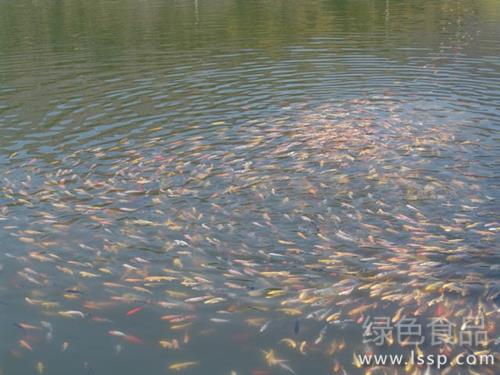
Fish fingerlings
I. Adjust density and rear by grade.After the beginning of autumn, choose suitable weather with relatively cool temperatures, seine the pond to sort out fish fingerlings of uneven size, and classify them as large (about 20 cm), medium (about 15 cm), and small (below 15 cm). Large-size fingerlings can be transferred to larger, better-conditioned adult fish ponds for mixed culture, while medium and small fingerlings should be reared intensively in separate places. For stocking density, generally a fish pond about 1.5 m deep should stock 3000-5000 fish per mu.
II. Fertilize according to water condition and feed reasonably.For fingerling ponds mainly containing silver carp and bighead carp, besides fertilizing according to water condition and maintaining suitable pond water fertility, an appropriate amount of fine feed should also be given, that is, at 9 a.m. and 4 p.m. every day, feed bran, cake meal, or compound feed, with 0.5-1 kg per thousand fingerlings. For rearing ponds mainly containing grass carp, besides feeding sufficient duckweed, tender grass, grass pulp, etc., additional rapeseed cake, rice bran, cottonseed cake, wheat bran, or compound feed should be given; feed green feed first, then fine feed.
III. Strengthen management and focus on disease prevention.Autumn temperatures and water temperatures are relatively suitable, and fish diseases are most likely to spread, especially among grass carp fingerlings, whose autumn diseases are severe. If disease prevention work is not strengthened, once fish diseases spread, losses will be serious. Therefore, keep inspecting the pond in the morning, at noon, and in the evening, observe the feeding and activity of the pond fish, adhere to the "four fixed" principles in feeding, promptly remove residual and leftover feed, regularly disinfect the feeding area and feeding platform, and regularly feed medicated disease-prevention bait and splash disease-prevention drugs. Pay attention to the water quality of the fish pond, add fresh water at the proper time, and apply quicklime to the whole pond about once every 20 days (about 20 kg per mu) to improve water quality, so as to prevent disease before it occurs and treat it early when it does.