Ewe lambing rate determines farming profitability, four measures to help you improve it
1. Do a good job of breed selection and breeding. The reproductive capacity of sheep is hereditary, and different breeds have different reproductive capacities. Some can produce two litters per year or three litters in two years, but most breeds produce 2—3 lambs per litter, with some reaching 4—8 lambs. Therefore, to improve reproductive capacity, it is necessary to introduce prolific traits in crossbreeding improvement, or select prolific variations to fundamentally improve the production performance of the flock, while also establishing and perfecting a breeding registration system and a improved-breed propagation system.
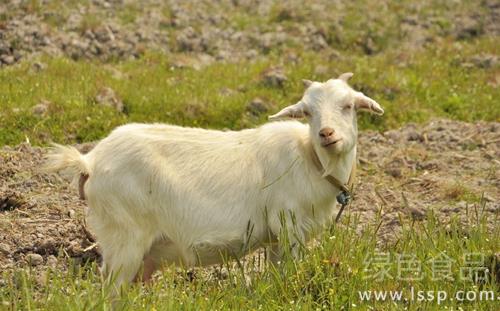
Goat
2. Select excellent breeding sheep. An excellent breeding ram has a good body condition, is energetic, with a short, thick and round neck, a sturdy constitution, a rectangular body, deep and broad chest, straight back and loin, broad, wide and full rump, testicles of moderate size and symmetrical left and right, a sheath opening far from the base of the scrotum, and good semen quality. Sheep with reproductive organ abnormalities such as monorchidism or cryptorchidism must not be used for breeding. For breeding ewes, select those that are large, compact in build, full in muscle, with elastic skin, deep and broad chest, straight back and loin, a slightly larger rear abdomen, straight limbs with wide spacing, fast growth and development, high meat yield, and many lambs; with a soft, spherical udder and good milk performance; and with alert senses, lively movement, light and quick walking, a high-held head, and glossy coat color.
3. Optimize the flock structure. Female goats should not exceed —8 years of age. For the overall flock structure ratio, breeding ewes account for 47%, replacement ewes and sheep born that year account for 50%, and breeding rams account for 3%. In addition, apart from replacing the breeding ram once a year to prevent inbreeding, work must also be strengthened to cull old sheep, sick sheep, weak sheep, and sheep that are permanently infertile, ensuring that sheep of suitable age account for more than 70% of the total flock; only in this way can stable and high production be achieved.
4. Strengthen feeding management. (1) Spring: the weather is cold and changeable, and it is also the lambing season, so ewes carry a heavy burden and have weak constitutions. During grazing, control the flock well, keep the strong waiting for the weak, reduce walking, and let them eat more grass. (2) Summer: the weather is hot and there are many mosquitoes and flies, so grazing should be done early and late in the day to create a cool feeding environment for the sheep. Extend the time as much as possible so the sheep can eat more grass. (3) Autumn: during grazing, change pasture frequently and choose places with grass seeds to encourage the sheep to store more fat, laying a foundation for mating and overwintering. (4) Winter: most ewes are in late gestation, and the climate is cold, so grazing should be steady and the amount of exercise appropriate; where conditions permit, appropriately supplement with high-quality hay and concentrate feed.