Prevention and Treatment Methods for Chemical Poisoning in Freshwater Crayfish When Chemical Levels Exceed Limits
Freshwater crayfish are very sensitive to chemical substances, and poisoning can occur when levels exceed limits. Substances that can cause poisoning in crayfish are collectively called toxicants, and their units are milligrams per liter and micrograms per liter.
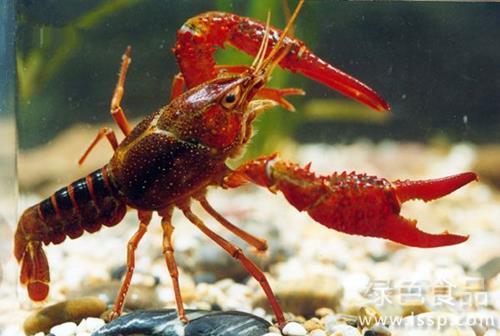
Crayfish
1. Causes: There are many substances that can cause poisoning in freshwater crayfish. By source, they can be divided into substances from the decay and decomposition of organic matter in ponds; industrial wastewater; pesticides, chemical fertilizers, and others. Residual bait, excrement, aquatic plants, animal carcasses, and other materials in ponds, after decay and microbial decomposition, produce large amounts of ammonia, hydrogen sulfide, nitrite, and others; industrial wastewater contains heavy metal elements such as mercury, copper, cadmium, zinc, lead, and chromium, petroleum and petroleum products, and toxic chemicals, all of which can poison crayfish, causing slow growth and even death. In addition, crayfish are especially sensitive to many insecticide pesticides such as trichlorfon, deltamethrin, malathion, and parathion. Besides directly damaging the crayfish body, these can also cause crayfish to develop hepatopancreatic lesions, leading to chronic death.
2. Symptoms: One type is chronic, with difficulty breathing, reduced feeding, and scattered deaths; as the condition develops, the mortality rate increases, and it is mostly caused by the decay and decomposition of large amounts of organic matter in the pond. The other type is acute, mostly caused by industrial wastewater and organophosphorus pesticides, and appears as mass mortality, with carcasses floating or sinking, and it is more obvious when dissolved oxygen in the pond water is low in the early morning.
3. Prevention and treatment measures: (1) Thoroughly investigate the water source of the crayfish pond to determine whether industrial wastewater, domestic sewage, rice field runoff, biological sewage, and other contaminants are mixed in; whether there are newly built pollution-discharging factories or farms around the crayfish pond; and whether there have been any changes in the water source. (2) Immediately transfer the surviving crayfish to a new pond that has been cleaned and disinfected, and increase dissolved oxygen to reduce losses. (3) Clean up the water source and water environment, eradicate pollution sources, or choose an area that meets standards to build a new pond. (4) For newly built aquaculture ponds, they must be soaked before use to reduce the content of harmful substances.