Beware of swine edema disease in autumn and winter: multiple swellings on the pig's body and inability to stand require vigilance
Swine edema disease is also called enterotoxemia, gastric edema, intestinal edema, gastrointestinal edema, piglet staggering disease, paralytic poisoning, etc. It is characterized by edema and neurological symptoms. After a pig is affected, edema appears under the eyelids, conjunctiva, gums, face, neck, and abdominal skin, and in severe cases there is also edema at the top of the head and the lower chest. When standing, the pig arches its back and trembles, has a staggering gait, gradually becomes unable to stand, has muscle tremors, lies down with paddling of the limbs, and emits hoarse screaming sounds; body temperature is normal or low. In cases with a short course, death occurs within a few hours.
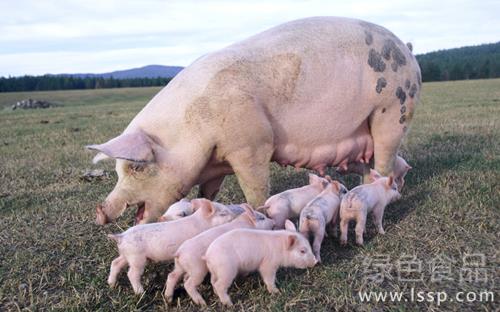
Pig
This disease occurs mostly in late autumn and early winter, with the highest incidence in November. The pathogenic microorganism causing swine edema disease is the toxin produced by hemolytic Escherichia coli with a specific serotype. Hemolytic Escherichia coli exists in the intestines of all pigs, but does not necessarily cause this disease. A certain amount is needed for the disease to occur. Whether hemolytic Escherichia coli can form toxins in the intestine is related to the strength of the pig's resistance and the surrounding environment. Especially when feeding conditions are poor, such as a single feed type, toxins are easily formed, which then causes this disease. In terms of pig age, it occurs mostly in piglets around weaning, and especially in fattening piglets, which are more susceptible and have a high mortality rate. Fattening pigs, sows, and large growing pigs also develop this disease, and the cure rate is low. Therefore, in autumn and winter, paying attention to the prevention and treatment of edema disease can avoid or reduce the occurrence of this disease.
Prevention of swine edema disease
(1) Strengthen feeding management, frequently supplement protein and vitamins, and keep the pig house clean and sanitary. Especially when piglets are about to be weaned, even more attention should be paid. Weaning should not be abrupt; feed should be diversified, and feeding conditions should change gradually so that piglets have an adaptation process.
(2) One week before weaning and three weeks after weaning, orally administer 1.5 grams of sulfamerazine per piglet per day to prevent edema disease.
(3) Cimicifuga rhizome, dried tangerine peel, Coptis chinensis, Poria cocos, Plantago seed, Alisma orientale, and Scutellaria baicalensis 20 parts each; honeysuckle, Magnolia officinalis bark, Arnebia root, and rhubarb 25 parts each; calcium hydrogen phosphate 200 parts; and mirabilite 550 parts. Grind together into a fine powder, mix evenly, and set aside. Piglets within 10 kg are given 10 grams orally each time; those 11—20 kg are given 20 grams each time; those 21—30 kg are given 30 grams each time; those 31—40 kg are given 40 grams each time; those over 40 kg are given 50 grams each time. Once daily (mixed into the feed), for five consecutive days.
(4) Fresh purslane 50 grams and arborvitae leaves 20 grams (daily amount per pig), cut into fine pieces, mix into the feed, and feed once each morning and evening, for 5 consecutive days; the effect is very good.
Treatment of swine edema disease
(1) Intramuscular injection of 30 milliliters of 10% sulfathiazole once, inject twice daily, for five consecutive days. A doubled dose can also be injected into the abdominal cavity once, once daily, for five consecutive days.
(2) Hydrocortisone injection at 5 milligrams per kilogram of body weight, injected intramuscularly or intravenously once, once daily, for three consecutive days.
(3) Inject 15 milliliters of 10% calcium chloride into the ear vein once, once daily, for five consecutive days.
(4) Mix 40 milliliters of 50% glucose solution with 10 milliliters of 5% ascorbic acid solution, then inject intravenously once. Once daily, for three consecutive days.