Autumn temperatures and water temperatures are suitable for autumn breeding of fry: pay attention to five seedling-rearing key points
Autumn air and water temperatures are relatively suitable for breeding and rearing fry, but for autumn-bred fry, five key points must be well controlled.
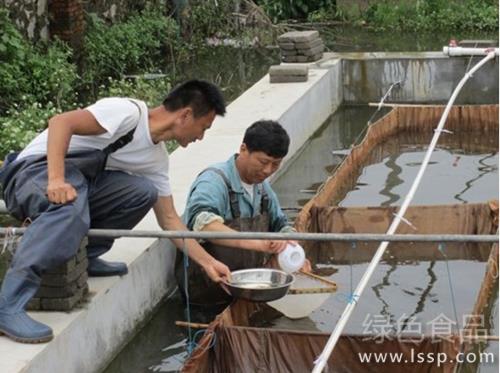
Breeding fry
Thorough pond clearing: remove enemies and pests in the pond such as frogs, snakes, fish, shrimp, insects and bacteria. The method is: drain the pond water, then for each mu of fish pond use 60-80 kg of quicklime or 4-5 kg of bleaching powder dissolved in water and splash it over the whole pond.
Scientific fertilization: apply fertilizer at the right time and in the right amount to provide abundant, suitable and palatable feed for autumn-bred fry. Six days before the fry are stocked, fill with 60 cm of fresh water; after 2 days, apply 300-400 kg of organic fertilizer per mu, then apply supplementary fertilizer moderately thereafter, keeping the pond water transparency at 30-35 cm.
Reasonable sparse stocking: sparse stocking can provide fry with a good ecological environment and accelerate their growth. Generally, fry can be stocked once for direct rearing, with 12,000-15,000 fry per mu. And according to the condition of the autumn fry, appropriately control the stocking ratio of each fish species; generally per mu, 7,000-8,000 silver carp, 2,000-3,000 bighead carp, and 3,000-4,000 grass carp can be stocked.
Scientific feeding: from fry to fingerling, feeding habits change greatly, so the feed must be palatable and appropriate in amount. From stocking the fry in the pond to the 15th day, while fertilizing the water, also splash 1.5-3 kg of soybean milk per mu over the whole pond, twice a day. After 5 days, switch to fine feed such as cake, bran and flour, twice a day, 2-4 kg per mu. Also begin feeding green feed; generally fry longer than 3 cm can be fed duckweed, 10-20 kg per mu per day; when they exceed 7 cm, feed 20-40 kg each time. When the fry grow to more than 8 cm, they can be switched to feeding water grass and dry grass. When there is no duckweed to collect, pulped water grass and dry grass can also be used instead. This method can be used to cultivate large-size fingerlings.
Regular water filling: generally start adding water 3-4 days after the fry are stocked, adding water once every 4-5 days, 10-20 cm each time; after 20 days, add about 10 cm every 7-10 days. When adding water, prevent the invasion of enemies and pests. Weeds at the pond edge and filth in the pond should be removed frequently; the feeding platform and feeding ground should be regularly disinfected once every ten days by splashing dissolved quicklime or bleaching powder.