Prevention and treatment methods for common diseases in meat pigeons such as Newcastle disease, pigeon pox, and ascariasis
During rearing, meat pigeons often develop various diseases due to external or internal factors. Some can recover on their own, while others must be treated with medication.
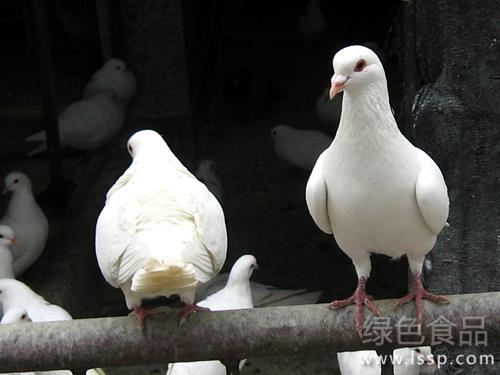
Meat pigeons
1. Pigeon Newcastle disease:The epidemic period is long, and the morbidity and mortality rates are high. In the early stage of the disease, the body temperature of meat pigeons gradually rises, the feathers become ruffled, the wings droop, appetite decreases, water intake increases, both eyes are tightly closed, and when held upside down, a large amount of mucus flows from the mouth. As the disease progresses, sick pigeons tuck their heads and close their eyes, are unwilling to move, show obvious trembling throughout the body, and their droppings turn yellow-green. In the late stage of the disease, the legs of sick pigeons become paralyzed, they cannot stand, often squat or lie on their sides, their droppings are green, thin, and pasty, and they eventually die from exhaustion.
Prevention and treatment: Strengthen feeding management, ensure the pigeon house is clean, and disinfect regularly; vaccinate the pigeon flock according to plan, injecting inactivated pigeon avian paramyxovirus type I vaccine subcutaneously or intramuscularly, and resistance can be obtained in about 1 day. For meat pigeons already suffering from the disease, fresh spleen, liver, brain, kidney, and other organs from pigeons that died of pigeon Newcastle disease can be collected to prepare an inactivated tissue vaccine for intramuscular injection.
2. Pigeon pox:Caused by pigeon pox virus, it is seasonal. Pigeon pox is divided into three types, namely the skin type, the diphtheritic type (also called the mucosal type), and the mixed type. The skin type forms blisters or nodules on skin that does not grow feathers, which then rupture and form scabs. Severely affected meat pigeons have decreased appetite, difficulty breathing, and elevated body temperature, and die within seven days after onset. The diphtheritic type occurs on the mucous membranes of the oral cavity, throat, and eyes, and in severe cases spreads to the trachea and esophagus.
Prevention and treatment: Strengthen feeding management, do a good job of disinfecting the pigeon house to reduce bites by mosquitoes and other blood-sucking insects, and vaccination can also be administered. For more severely affected birds, the pox scabs can be removed and iodine tincture applied to the sores.
3. Pigeon ascariasis:An intestinal parasitic disease caused by roundworms and nematodes. The worms parasitize the small intestine of meat pigeons, absorb nutrients, and disrupt the physiological function of the intestines, thereby causing disease. Mildly infected meat pigeons are listless, tire easily, have poor muscle development, and like foreign objects. In severe infections, body weight decreases, mucous membranes become pale, feather growth is poor, and sometimes droppings contain blood or even adult roundworms.
Prevention and treatment: Clean up droppings promptly and try to prevent meat pigeons from contacting droppings; levamisole hydrochloride can be used for deworming, with each meat pigeon taking half a tablet each time or 25 mL per kg of body weight, or piperazine can be used for deworming at 200-300 mL per kg of body weight for 2 consecutive days.