The Relationship Between Laying Rate and Poultry Farming Profitability: How to Increase the Laying Rate of Laying Hens
The laying rate of laying hens directly affects the economic returns of poultry farmers, so increasing egg production is one of the key steps in raising laying hens. Strengthening feeding management according to the physiological characteristics and nutritional needs of laying hens helps increase their laying rate. The main feeding and management methods are as follows:
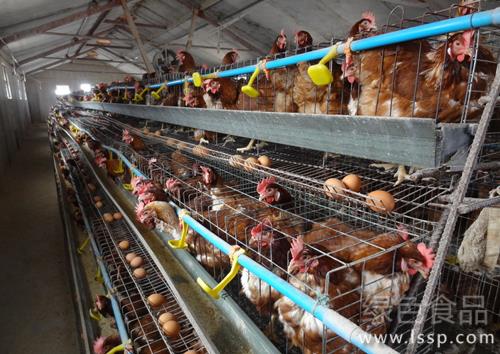
Laying hens
Segmented feeding:
Divide the laying period of hens into different stages according to their age and laying level, and adopt different management methods, which can increase the laying rate. Generally, the two-stage method or the three-stage method is used.
The two-stage method uses 50 weeks of age as the dividing line. Before this point, the laying hens are not yet fully developed, and this period coincides with their peak laying period, so the protein content in the chicken feed should be 16-17%. After 50 weeks of age, the laying hens have completed their development, and egg production does not rise but instead declines, so the protein content should also be reduced, kept at 14-15%.
The three-stage method divides laying hens by age into three stages: 20-42 weeks of age, 43-62 weeks of age, and after 63 weeks of age. In these three stages, the protein content in the feed is divided into 18%, 16-17%, and 15-16%.
When using segmented feeding, feed changes require a transition period of one to two weeks; do not make sudden changes, as this will cause stress in the flock and affect laying. This segmented feeding method can make the flock's laying peak appear earlier and rise faster. The laying peak lasts longer, which not only reduces feed costs but also increases the hens' egg production.
Restricted feeding
Restricted feeding during the laying period of laying hens can improve feed utilization, save feed, reduce feeding costs, and effectively control the body weight of laying hens, reduce their maintenance needs, and increase their production needs. When implementing restricted feeding, many factors such as the breed of laying hens, environment, temperature, and season must be considered, and it cannot be treated uniformly. It is generally believed that the energy restriction in feed should be appropriate at a reduction of 8-10%.
Adjusting feeding
Based on the feeding standards for laying hens, maintain the relative stability of the daily ration. Under no circumstances should the feed formula undergo major changes, and the raw materials and nutritional components should not change greatly; fine-tuning should be carried out so that the laying hens have time to adapt. Otherwise, it will affect the feed intake of the laying hens, leading to a decline in egg production. Each adjustment should be accompanied by careful observation of the hens' feed intake and egg production, so that problems are discovered promptly, causes are identified, and adjustments are made in time. Only by understanding the physiological characteristics and laying patterns of laying hens, strengthening feeding and management, providing a good environment, and carefully handling every step can the laying rate of laying hens be increased.