What Are the Raw Materials for Organic Fertilizer? A Detailed Guide to Common Types
What raw materials are used for organic fertilizer? What benefits do they offer? An introduction. There are many kinds of organic fertilizer raw materials; the more common ones are livestock and poultry manure and urine and crop straw, as well as green manure, oilseed cakes, plant ash, sludge, household waste and sewage, all of which can be used for organic fertilizer. Zhongdi Web has compiled the information on using livestock and poultry manure as organic fertilizer...
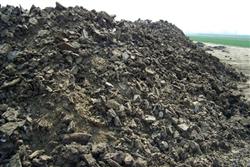 What raw materials are used for organic fertilizer? What benefits do they offer? An introduction
There are many kinds of organic fertilizer raw materials; the more common ones are livestock and poultry manure and urine, crop straw, as well as green manure, oilseed cakes, plant ash, sludge, household
waste and sewage, all of which can be used for organic fertilizer. Zhongdi Web has compiled the advantages and disadvantages of using livestock and poultry manure as organic fertilizer, listed below for netizens' reference.
Disadvantages of livestock and poultry manure as an organic fertilizer raw material:
1. Organic fertilizer with livestock and poultry manure as the main raw material has a relatively high salt content and easily salinizes the soil, raising the soil salt concentration, raising the critical point of fertilizer efficiency of nutrient elements for crops, and increasing the amount of fertilizer applied. In severe cases, it can cause seeds not to germinate and burn seedlings and roots.
2. The nitrogen in livestock and poultry manure organic fertilizer is mainly in the form of urate nitrogen. Urate cannot be directly absorbed and used by crops; when it decomposes in the soil it consumes a large amount of oxygen and releases carbon dioxide gas, so it easily harms crop roots.
3. In livestock and poultry manure organic fertilizer, Bacillus species, Escherichia coli, fungi of more than ten genera and some parasites can be detected. It carries relatively many pathogens and insect eggs itself, and easily attracts diseases and pests.
4. Some livestock and poultry manure organic fertilizers have the problem of trace element content exceeding standards. In livestock and poultry feed, because trace elements such as copper, iron, zinc, manganese, cobalt, selenium and iodine are added in large amounts, many trace elements not absorbed by the livestock and poultry accumulate in the manure. According to surveys by the relevant units, in the feed used by some large and medium-sized livestock and poultry farms, heavy metal pollution is relatively serious; the contents of copper, zinc, chromium, lead and cadmium generally exceed the national feed hygiene standards or the pollution-free production feed standards, and in particular toxic elements such as arsenic and mercury also occasionally exceed the standards.
5. Most livestock and poultry manure fertilizers, or organic fertilizers with livestock and poultry manure as the main raw material, are acidic and prone to breeding pathogens; they must be neutralized with lime, which causes soil compaction.
6. Organic fertilizer with livestock and poultry manure as the main raw material has relatively hot fertilizer properties; when used in high-temperature weather, it easily burns seedlings and roots.
7. Organic fertilizer with livestock and poultry manure as the main raw material needs to be piled and composted to maturity before use, requires a lot of labor, and takes a long cycle.
8. Because organic fertilizer with livestock and poultry manure as the main raw material has relatively many impurities, its purity deviation is extremely large and its content is extremely unstable, so the nutrient content and effect of the application cannot be guaranteed.
Advantages of livestock and poultry manure as organic fertilizer:
1. It can promote increased crop yield and income:Because organic fertilizer made from livestock and poultry manure is rich in organic matter, it can comprehensively provide crops with nitrogen, phosphorus, potassium and various medium and trace elements, greatly improving the quality of agricultural products. After application, melons and vegetables are sweet and rice is fragrant, and it can effectively improve soil physical and chemical properties, loosen the soil, enhance soil aeration, and greatly increase soil fertility.
The biological organic fertilizer made from livestock and poultry manure contains components such as nitrogen-fixing bacteria, phosphate-solubilizing bacteria and potassium-solubilizing bacteria. After application, it can transform nutrients in the soil into forms usable by crops, continuously supplying nutrients to crops.
2. It can effectively promote crop growth:The application of organic fertilizer made from livestock and poultry manure will cause a large number of beneficial active bacteria to multiply rapidly, which can effectively inhibit the growth of harmful microorganisms. At the same time, it produces various enzymes, promotes robust crop growth, enhances crops' resistance to stress and to diseases and pests, reduces the amount of pesticide applied, and alleviates continuous cropping obstacles.
3. It can effectively improve soil fertility:A large number of beneficial active bacteria directly participate in processes such as the transformation of soil matter and energy and the formation and decomposition of humus. They play a cementing role in soil aggregate structure, effectively improving soil physical properties, enhancing the soil's abilities to aerate, retain water and retain fertilizer, preventing soil compaction and acidification, building up soil fertility, improving fertilizer utilization, reducing fertilization costs, and enabling the land to achieve a virtuous cycle.
Matters needing attention for using livestock and poultry manure as organic fertilizer:
Note one:The nitrogen in fresh chicken manure is mainly urate salts; these salts are not easily absorbed and used directly by crops, and they are harmful to the growth of crop roots. Therefore, this kind of manure fertilizer should be piled, fermented and decomposed before application. Chicken manure ferments at a high temperature and easily damages young plant roots; fresh manure generally should not be applied directly and needs to be mixed with sewage or composted together with other organic fertilizers, and only applied after being fully decomposed through piling. In particular, because the additives in chicken feed contain a very high proportion of hormone components, hormone removal treatment should be carried out through composting. At the same time, chicken manure and urine easily carry roundworm eggs, so they also need to be piled for about 40 days to kill them. Therefore, it is recommended that poultry manure be piled for 60 days at room temperature, after which it can be safely used for pollution-free vegetable production. However, because of low temperatures in winter, composting in winter should be extended by 2 months compared with composting in summer and autumn.
In addition, farmers should also be reminded that when applying chicken manure it should be fully mixed with soil and should not be applied too thickly, so as not to damage roots; chicken manure should be applied evenly, as only in this way can the plants grow uniformly and be easy to manage; when transplanting, the roots must never be in direct contact with chicken manure, and when soil from the drainage ditch is banked up onto the ridge, it is best to have a 10-20 cm isolation layer.
Note two:Pig manure also contains roundworm eggs, and it takes about 50 days to kill them; its additives also have a very high hormone content, and hormone removal treatment through composting is likewise needed. Cow manure requires more than 20 days of composting. Therefore, it is recommended that farmer friends pile livestock manure for 60 days at room temperature before application, after which it can be safely used for pollution-free vegetable production. However, because of low temperatures in winter, composting in winter should be extended by 2 months compared with composting in summer and autumn.
In view of the above advantages and disadvantages of organic fertilizer raw materials, it is recommended that farmer friends must ensure full decomposition when using these organic fertilizers. If conditions permit, it is best to choose the currently more reputable commercial organic fertilizers from large-scale industrial production on the market.
Click to get more organic fertilizer application techniques
Click to get more chemical fertilizer application techniques