What precautions should be taken when applying foliar fertilizer to vegetables?
What should be noted when using foliar fertilizer on vegetables? Is there a netizen who can help explain? Zhongdiwang has compiled the precautions for applying foliar fertilizer to vegetables, listed below for netizens' reference. Note 1: Choose fertilizer according to the type of vegetable: For vegetables grown mainly for their stems and leaves, such as Chinese cabbage, cabbage, spinach, celery, asparagus lettuce...
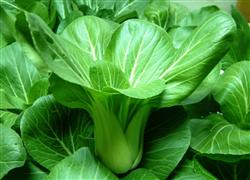 What should be noted when using foliar fertilizer on vegetables? Is there a netizen who can help explain?
Zhongdiwang has compiled the precautions for applying foliar fertilizer to vegetables, listed below for netizens' reference.
Note 1: Choose fertilizer according to the type of vegetable:
For vegetables grown mainly for their stems and leaves, such as Chinese cabbage, cabbage, spinach, celery, asparagus lettuce, Chinese chives and so on, foliar fertilizer is generally based on water-soluble quick-acting fertilizers such as urea and ammonium sulfate, with a urea concentration of 2% and an ammonium sulfate concentration of 0.3%, sprayed at 60-80 kg per mu, generally 2-3 sprays during the whole growth period is appropriate; a 0.3%-0.5% rice vinegar solution can also be sprayed, at 50-60 kg per mu.
For eggplant, chili pepper, tomato, zucchini, cucumber, and cowpea, yardlong bean, common bean and so on, the foliar fertilizer should be based on a mixed nitrogen-phosphorus-potassium fertilizer or a multi-element compound fertilizer, such as 0.3% monopotassium phosphate, 1% urea plus 2% superphosphate (leachate) plus 0.5% potassium sulfate solution, and 0.08% rare earth micro-fertilizer solution, Yemianbao, photosynthetic micro-fertilizer, ammonium molybdate and other micro-fertilizers.
Generally, spray 2-3 times during the whole growth period, at 40-50 kg per mu; spraying compounded multi-element fertilizer on melon and fruit vegetables has a fairly notable effect. For example, spraying a sugar-nitrogen solution (0.2% urea plus 0.3% monopotassium phosphate plus 1% sucrose) can not only increase yield, but also significantly increase the plants' disease resistance and reduce the harm of diseases such as vegetable downy mildew.
For vegetables such as onion, garlic, radish, carrot, potato, taro and so on, foliar fertilizer is generally based mainly on phosphorus and potassium fertilizers, such as 0.3% monopotassium phosphate solution, superphosphate and wood ash steep liquor, etc. Root vegetables can be sprayed with 0.2% borax solution, which can effectively prevent the occurrence of physiological diseases. Spraying potatoes with a mixed solution of 0.1% zinc sulfate plus 0.2% ammonium molybdate has a significant effect on tuber expansion and quality improvement.
Note 2: Spray at the appropriate time:
At the vegetable seedling stage, growth is small and nutrient consumption is low, and fertilizer damage is likely to occur after spraying, so spraying is not suitable;
During the vegetable vining stage, stems and leaves grow vigorously and the root system has strong absorption capacity, so foliar fertilization is also not suitable;
During the stage when the vegetable's product organ forms, the root system declines and absorption capacity weakens, while nutrient consumption is at its greatest; therefore this period is the best time to spray foliar fertilizer, and it can effectively resolve the contradiction between vegetative growth and reproductive growth of the plant.
Click to get more foliar fertilizer application methods
Click to get more fertilizer application methods