How to handle winter breeding of domestic rabbits? Do a good job of winter breeding to increase profits
Raising domestic rabbits is a good way to get rich. To enable domestic rabbits to breed normally, their living environment must be good. Doing a good job of winter breeding of domestic rabbits can improve the profitability of rabbit farming.
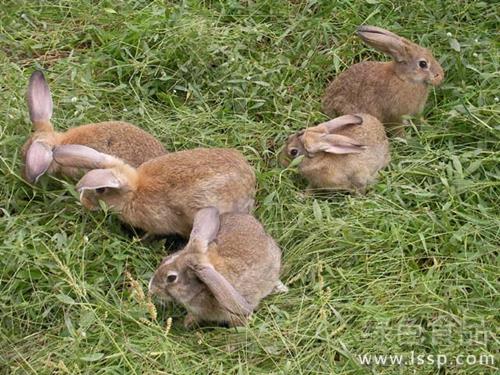
Domestic rabbits
Select good breeding rabbits:For breeding rabbits used for winter breeding, male rabbits should be 8-10 months old and weigh more than 3.5 kg; female rabbits should be 6-8 months old and weigh more than 3 kg. Breeding male rabbits should be full in appearance, long in body, flat in back, agile in movement, normal in appetite, thick and strong in the limbs, glossy in fur, well developed, strong in libido, and good in semen quality; breeding female rabbits should be robust in build, gentle in temperament, glossy in fur, good in reproductive organs, free of dirt around the anus and vulva, normal in estrus, with no fewer than 4 pairs of teats, able to carry straw in the mouth and pull fur to make a nest, able to nurse, and giving birth to many young with good constitution.
Do a good job at the mating stage:In winter, domestic rabbits are not fond of activity, and the estrous cycle is 7-17 days, lasting 1-3 days. Therefore, it is necessary to grasp the patterns of estrus and mate them in time. In winter, mating should be carried out at noon on a sunny day after the tenth month of the lunar calendar. At this time, domestic rabbits have strong libido, abundant energy, and are relatively quiet, so they conceive easily. In addition, 1 hour before sunrise and 1 hour after sunset in winter is also a period when the sexual function of domestic rabbits is vigorous, so mating can also be carried out then. After breeding rabbits mate, immediately pat the female rabbit's rump with your hand to stimulate contraction of the hindquarters, take in the semen, and increase the conception rate. A “double mating method” can be used, that is, mate with one male rabbit in the morning and another male rabbit in the evening; a “administrative mating method” can also be used, that is, the same male rabbit mates once in the morning and once in the evening, so that the female rabbit gives birth to more young rabbits.
Cold protection and heat preservation in the rabbit house:Domestic rabbits like a dry, clean environment, with an optimum temperature of 10-25°C. Therefore, in winter, cold protection and heat preservation in the rabbit house must be done well. The rabbit house should be built in a place sheltered from the wind, facing the sun, and warm. Cage rearing, indoor rearing, and plastic shed rearing are all acceptable. The temperature should be above 10°C, and at the lowest not below 5°C. During the breeding period, hang straw curtains at the door of the rabbit house and spread soft grass inside the house to prevent wind and preserve heat. When the weather is warm, rabbits can be let out of the house to move around and receive sunlight. Never make a fire and produce smoke inside the rabbit house, to prevent gas poisoning or respiratory diseases in domestic rabbits. Plant ash or quicklime can also be scattered inside the rabbit house to prevent dampness.
Strengthen feed nutrition:In winter, in the daily ration of pregnant rabbits, green feed such as wild vegetables, cabbage leaves, and carrots should be no less than 30%, and feed such as wheat bran, rice bran, soybean cake, fish meal, and bone meal should also be added to prevent the feed from being monotonous. Otherwise, the conception rate of female rabbits will be low, the young rabbits born will be weak in vitality, and the mothers will be prone to paralysis after giving birth. After each feeding of the rabbits, provide more drinking water to help digestion. Do not feed vegetables, grass, and other feed that carry soil, are moldy and spoiled, or are frosted.
Protect the young rabbits well:After the female rabbit gives birth to the young rabbits, feed her brown sugar water and salt water to prevent her from eating the young rabbits because of thirst. In winter, young rabbits should be allowed to nurse for a few more days to strengthen their constitution and resist severe cold. When the young rabbits reach 16-19 days of age, they can try eating feed. At first, a small amount of soybean milk and rice broth can be fed, and after a few days, wheat flour and soybean residue can be added. After another 6-7 days, mineral feed can be mixed in, and carrots and the like can be fed as appropriate. Young rabbits should be fed 4-5 times a day, with one additional feeding at night, and sufficient drinking water should be provided after each feeding. Young rabbits should be allowed to move more and bask in the sun more to increase the survival rate.
Disease prevention and control:In winter, in addition to preventing domestic rabbits from getting cold and freezing, they should also often be fed garlic, ginger, yeast tablets, and the like to prevent diseases. Once disease occurs, they must be isolated immediately and treated according to the symptoms to prevent spread.