How to prevent and treat esophageal obstruction in dairy cows with a foreign body, manifested by pawing the ground, arching the back, and drooling?
When a dairy cow is eating, it suddenly stops eating, shakes its head and retracts its neck, paws the ground with its forelimbs, arches its back and loins, drools heavily, chews with an empty mouth, and constantly swallows, among other symptoms. When the obstruction is in the cervical esophagus, the obstructing object can be felt by hand from the outside; when the obstructing object is in the thoracic esophagus, the cervical esophagus becomes distended, a large amount of saliva accumulates in the esophagus, and a fluctuating sensation can be felt on palpation.
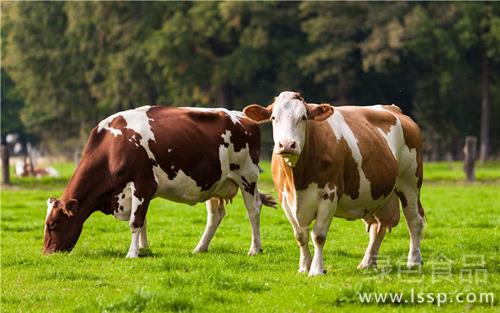
Dairy cow
I. Preventive measures
Prepare the forage reasonably, feed at fixed times and in fixed amounts, and when feeding root tubers or cottonseed cake-type feed, chop them up before feeding, and prevent dairy cows from secretly eating large pieces of feed. When a dairy cow is eating, it must never be suddenly driven or startled.
II. Treatment methods
The treatment of this disease lies in quickly removing the esophageal obstruction and clearing the esophagus. If the dairy cow has already developed acute ruminal tympany, puncture and release the gas immediately to prevent the dairy cow from suffocating to death.
1. Squeezing method:Squeeze the obstructing object from outside the esophagus with both hands. When the obstructing object is at 1/3 of the esophagus, squeeze and push the lower part of the obstructing object so that it moves to the pharynx, then quickly remove the obstructing object from the mouth by hand. When the obstructing object is in the middle-lower part of the esophagus, push it downward into the stomach.
2. Pushing method:Insert a stomach tube, pour in 20 ml of 1% procaine and 100 ml of liquid paraffin, and after 1 minute, forcefully push the stomach tube downward to push the obstructing object into the stomach.
3. Inflation method:When the inserted stomach tube presses against the obstructing object, connect the outer end of the stomach tube to an air pump and forcefully pump air quickly. With each pumping, while the esophagus is expanded, push the stomach tube down a little. Generally, after pumping 3 to 5 times until the obstructing object is pushed below the original obstruction site, the obstructing object can be pushed into the stomach.
4. Flushing method:When encountering obstruction caused by crushed particles, the flushing method can be used, that is, pour an appropriate amount of clean water into the esophagus through the stomach tube, then quickly lower the outer end of the stomach tube, and lower the cow's head accordingly, to guide out the feed particles. Repeat the operation until water can flow into the stomach, clearing the esophagus.
5. Hammering method:Restrain the dairy cow in lateral recumbency, place a flat wooden board under the obstructed site of the cervical esophagus, then the operator places an upright wooden board on top of the obstructed site (the thickness and width of the wooden board should be such that its cross-section is slightly larger than the obstructing object, and a length of 50 to 80 cm is suitable), and an assistant uses a pound hammer to forcefully strike the top of the upright wooden board, which can flatten (or smash) the obstructing object, then pinch and press it by hand or push it with a stomach tube or let the dairy cow swallow the obstructing object on its own.
6. Salt administration method:For obstruction caused by root tuber feed and melons and fruits, etc., salt (30 to 50 grams) can be forcibly put into the esophagus by hand. Through the osmotic pressure effect, the water in the obstructing object is drawn out, making the obstructing object smaller in volume so that the dairy cow can swallow it on its own.