Diagnosis and Treatment of Sudden Death Caused by Water Intoxication in Goslings with Watery Droppings
In goslings, drinking excessively after dehydration causes a sudden increase in body water that disrupts the balance, leading to large amounts of water accumulating in the tissues, a sudden drop in plasma sodium, chloride and other ion concentrations, and water entering the cells, causing cellular edema, especially cerebral edema, which leads to neurological dysfunction or increased intracranial pressure and death of the goslings. The main clinical signs are neurological symptoms.
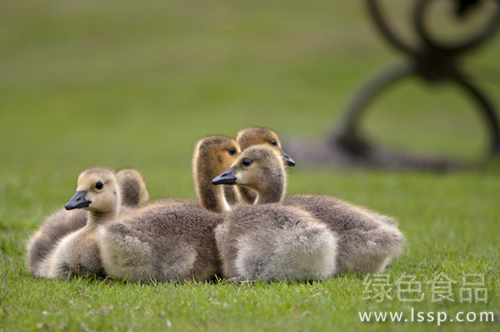
Gosling
I. Clinical symptoms:
The main signs are: mucus drooling from the beak, open beak and head shaking, unsteady gait, some circling, some in a sitting-dog posture, some repeatedly tilting the head backward and paddling with the legs, watery droppings, and rapid collapse and death.
II. Diagnosis and treatment measures:
Due to negligent management, the goslings were deprived of water for a long time, causing water intoxication. (1) The flock was immediately stopped from drinking fresh water, and salt was added to the goslings' drinking water at a concentration of 0.9%; at the same time, the goslings' water intake was strictly controlled, giving small amounts each time and supplying it intermittently, so that the goslings would not drink excessively. (2) For severely affected geese, each was given an intramuscular injection of 0.5 ml of caffeine sodium benzoate and an appropriate amount of compound vitamin B by oral drops.
III. Summary
1. All physiological activities of geese depend on water; water sustains the life, growth and production of geese and is an important substance for transporting nutrients, excreting waste, regulating body temperature, osmotic pressure and balancing acid-base status. The water content of geese also differs at different growth and development stages; for example, goslings contain about 70% water in the body, while adult geese contain about 50%. According to measurements, geese need to drink 3.7 ml of water for every 1 gram of feed they eat, and at an air temperature of 12-16°C, geese need to drink an average of 1 liter of water per day.
2. Dehydration can lead to disordered digestive and absorptive function in goslings, decreased appetite, inability to excrete metabolic products from the body in time, insufficient blood volume, respiratory dysfunction, and accumulation of large amounts of nitrogenous substances, causing autointoxication. A water loss of 10% in the goose body can cause metabolic disorders, and a loss of more than 20% threatens life.
3. Drinking excessively after dehydration in goslings causes neurological dysfunction or increased intracranial pressure, leading to water intoxication manifested as neurological symptoms. Therefore, prevention of water intoxication in goslings is most important; once it occurs, small amounts of isotonic water should be given several times until the symptoms ease.