How to prevent and treat common acute illnesses in newborn lambs? Improper or delayed rescue can easily lead to death
When lambs are born, dangerous conditions often occur. If rescue methods are improper or not timely, they often cause death and bring losses to production. The common critical conditions of lambs and their treatment methods are briefly introduced as follows:
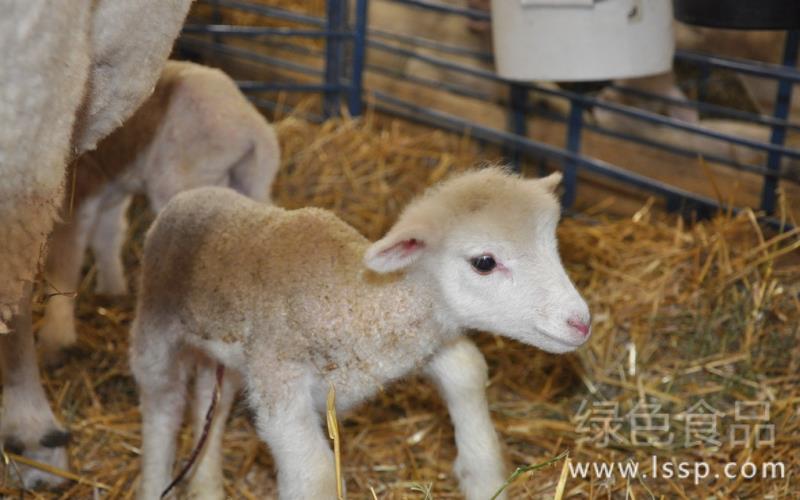
Lamb
1. Lamb inhaling fetal water
Symptoms: After birth, the lamb breathes rapidly, the ribs expand noticeably, it prefers to stand, lowers its head and closes its eyes, and because of difficulty breathing, it suckles intermittently; the mouth and nose tip are cold. If not treated in time, most die after 3 to 4 hours.
Treatment: Use 20 milliliters of 50% concentrated glucose injection, add 0.2 milliliters of caffeine, and give one intravenous injection; at the same time, inject 50,000 to 100,000 units of penicillin intramuscularly, and after an interval of 4 to 6 hours, use the medicine once more (if the weather is cold, the glucose solution and caffeine can be warmed before intravenous injection).
2. Umbilical cord ruptured and bleeding
Symptoms: After the lamb is delivered, it breaks the umbilical cord by struggling on its own, or the cord is pulled and broken carelessly during delivery, and bleeding does not stop. The lamb's spirit gradually weakens, the conjunctiva becomes pale, it cannot stand steadily, and then it loses blood, becomes comatose and dies.
Treatment: This is mainly handled according to the length of the remaining ruptured umbilical cord. If the umbilical cord continues to bleed for more than ten minutes after the lamb is born, and part of the cord root still remains, use sterilized suture thread to tie the root of the umbilical cord tightly to stop the bleeding. If the umbilical cord is broken off at the base and bleeding does not stop, use the purse-string suture method to stitch and tie the skin around the base of the umbilical cord to stop the bleeding. At the same time, inject hemostatic and anti-inflammatory drugs.
3. Postpartum weak lamb
Symptoms: Lambs with congenital malnutrition are born with a small body, thin and weak legs, and cannot stand. Weak lambs caused by other reasons show shallow and weak breathing, powerless limb movement, body temperature mostly at normal level, cold limb ends and ear and nose tips, and are mostly in a comatose state.
Treatment: First, use a warm water bath. Fill a large basin with warm water at 40 to 42°C, immerse the lamb's body in the warm water, with its head extending outside the basin to prevent drowning from choking on water. While bathing, turn it from time to time. When the water temperature drops, pour out part of it, then add part of hot water, so that the water temperature is always kept at about 42°C. After half an hour in the water bath, the lamb's mouth becomes warm, it opens its eyes, and suckling movements appear; then dry it and place it in a warm, windproof place, and feed it colostrum.
Second, for those with weak constitution or severe illness, while giving the warm water bath, inject 10 milliliters each of 25% glucose and 10% calcium gluconate. Weak lambs with malnutrition should be treated with comprehensive measures after the warm water bath. On one hand, the ewes should be given strengthened supplementary feeding, with more protein-rich and succulent feed to ensure sufficient milk; on the other hand, the lambs should be given supplementary cod liver oil and human milk powder, or intramuscular injection of vitamin AD, and should also be carefully fed, assisted in suckling, kept warm and clean, and protected from crushing and from being abandoned by the ewe because of changed odor after the water bath.