Tilapia still dying in large numbers in winter? Preventing and treating nutritional diseases is key
Tilapia is a tropical fish, with an optimum growth temperature of 25-35°C, while below 10°C is the lethal temperature. However, in southern China, water temperature rarely drops to the lethal temperature for tilapia, which provides favorable conditions for tilapia to overwinter safely under natural conditions. Yet in winter, large-scale disease outbreaks and deaths of tilapia still occur in many places. Below, the causes of disease and death in tilapia are discussed, and prevention and control measures are proposed for reference.
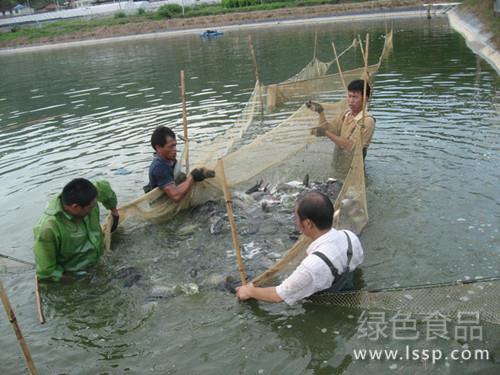
Tilapia farming
I. Disease occurrence and symptoms:
In winter, tilapia deaths mostly occur two or three days after a sudden drop in temperature, when the temperature rises somewhat again. Losses vary greatly: some are concentrated mass die-offs, while others involve continuous deaths over several days. Examination of diseased fish shows externally: dull body color, lacking luster, thin body shape; exophthalmia, cloudy and whitish lens; distended abdomen, with hyperemia on the skin. However, the fins and gills show no abnormal symptoms, and there are no parasites on the body surface. Necropsy shows: the abdominal cavity is filled with water; the liver is diseased, mostly yellow or pale yellow, and enlarged with fat deposits. It can be preliminarily determined that the tilapia has a bacterial disease or nutritional disease.
II. Causes of death:
Changes in water temperature, salinity, dissolved oxygen and other environmental factors will more or less cause adverse stimulation to tilapia. When the feed lacks vitamin A, E, B1, B2 and the element zinc, fish diseases are easily induced, with symptoms similar to those described above, and can be determined as nutritional diseases. Investigation found that at the lower limit of survival temperature, although tilapia will not die immediately, their activity is slow and they basically stop feeding. Therefore, the fish body has few vitamins and trace elements. When the weather turns warm, tilapia activity tends to become active, but the nutrient elements in the body cannot meet the needs of activity. At this time, pathogenic bacteria also become active as the temperature rises. Due to nutritional deficiency, the liver and kidneys of tilapia are damaged, the fish body's immunity declines, and it is susceptible to infection by pathogens, causing illness and death in tilapia. Therefore, the reduced accumulation of nutrient elements, especially vitamins and inorganic salts, in the fish body is an important cause of tilapia deaths in winter.
III. Prevention and control methods:
1. Nutritional improvement:
Using complete compound feed can ensure that the fish obtain comprehensive nutrition, so that the accumulation of vitamins and inorganic salts in the fish body can meet the needs of activity. In this way, even if the temperature drops and affects fish feeding, the fish body has sufficient nutrients and can overwinter smoothly. In addition, data show that during the overwintering period, the protein requirement of tilapia is not much different from that in normal farming, while the requirement for fat and vitamins is greater than in normal farming, so about 1% fish oil or vegetable oil should be added to the feed one month before overwintering. At the same time, high-quality "multivitamins" should be added in a timely manner to increase the accumulation of fat and vitamins in the fish body, which is beneficial for overwintering.
Feeding
2. Disease prevention and control:
Due to malnutrition, tilapia is easily invaded by pathogenic bacteria and is prone to saprolegniasis and ulcer disease (caused by Aeromonas hydrophila), among others. In addition, in low-temperature environments, it is also easily parasitized by parasites such as ichthyophthiriasis, chilodonelliasis and trichodiniasis. Therefore, the water body must be disinfected regularly to keep the water quality fresh and prevent disease. Commonly used water disinfectants include quicklime, "strong chlorine essence", and a copper sulfate and ferrous sulfate mixture (5:2). For pond farming, the whole pond is splashed for disinfection, with doses of 200 ppm, 0.3 ppm and 0.7 ppm respectively. Use one type every 10 days, rotating among them. In addition, when the water temperature is below 15°C, saprolegniasis is prone to outbreak, and prevention and control measures should be taken promptly. When dead tilapia are found, they should be removed promptly, and medication should be applied for prevention and control at the same time. Generally, a mixture of table salt and baking soda (1:1) is splashed over the whole pond, with doses of 0.2 ppm and 4 ppm. For cage farming, the hanging bottle, hanging bag and hanging basket methods are used to prevent and treat fish diseases. The drugs used are bleaching powder or a copper sulfate and ferrous sulfate mixture (5:2). Generally, 3-6 bottles (bags or baskets) are hung per cage each day, each containing 100-150 grams of medicine, twice a month, for 2 consecutive days each time, used in rotation. In addition, attention should be paid to increasing oxygen in winter, and the aerator should be turned on regularly to keep the dissolved oxygen in the water body above 4 mg/L. If there is no aeration machinery, measures such as manual water agitation or water injection and exchange can be used to increase oxygen.