Cold weather and inadequate nutrition in early winter: guard against laying ducks stopping egg production
Laying duck "egg-laying setback" refers to the phenomenon in which mother ducks that entered the laying period in November stop laying because the weather turns gradually colder, the day-night temperature difference is large, and nutrition is inadequate. When laying ducks show signs such as smaller eggs, thinner eggshells, delayed laying time, or wet feathers after drinking or playing in water, take timely measures:
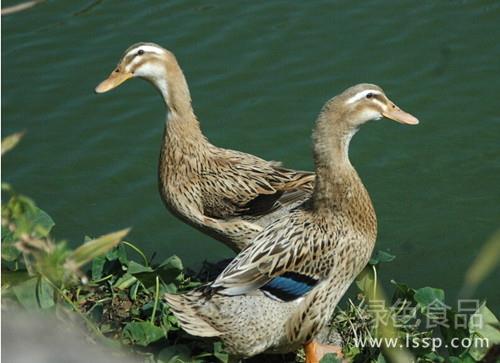
Laying ducks
Adjust the duck flock:In early winter, promptly cull old, weak, sick and disabled ducks from the flock, keeping mother ducks with good production performance and strong physiques. At the same time, keep appropriately more male ducks so that they chase one another and increase the laying ducks' amount of exercise.
Raise the nutritional level of the feed:Appropriately increase the proportion of corn, broad beans and soybean cake in the daily ration, control the laying ducks' feed intake, and raise the nutritional level of the feed.
Protect against cold and keep warm:Seal the holes in the duck shed well, hang straw curtains on doors and windows, and spread thick dry soft thatch, rice straw and similar materials on the shed floor to ensure the ducks' abdomens are not exposed to cold. At the same time, do the related epidemic prevention work well to ensure the laying ducks' health.
Supplement lighting:Laying ducks need 16 hours of light per day during the laying period. Winter has short days and long nights, so light is clearly insufficient; therefore install 40-60 watt bulbs in the duck shed (one bulb per 20 sq m), with the bulbs 2 m above the ducks' backs, and fit lampshades so that the light is concentrated on the ducks' bodies. The light should be even, and the lights should be on for 3-4 hours every evening.
Driving the ducks:Driving the ducks can enhance laying ducks' cold resistance and digestive capacity and prevent them from stopping laying. In the duck shed, call out softly to make the flock start moving, and slowly drive them in a circle in the same direction, generally 4-5 rounds each time, once every 1 hour, 2-3 times a day. Especially before the ducks enter the water, they should also be driven. Only when more than 80% of the ducks quack loudly may the shed be opened to let the ducks out into the water, so as to improve the ducks' ability to adapt to the temperature outside the shed and the water temperature.
Add cod liver oil:Cod liver oil is rich in vitamin A and vitamin D, and can enhance laying ducks' immunity and stabilize the laying rate. Specific feeding method: feed each duck 1 milliliter per day; first mix the cod liver oil into wheat bran, then mix it evenly into the feed, and feed for 3-5 days. If the laying ducks lay normally and their feathers are glossy, feeding can be stopped.