Low winter temperatures affect quail egg production rates; five management points to master
Winter temperatures are low and daylight hours are short, which greatly affects the production of laying quail. To balance the production of breeding eggs or commercial eggs, 5 measures should be taken in quail rearing:
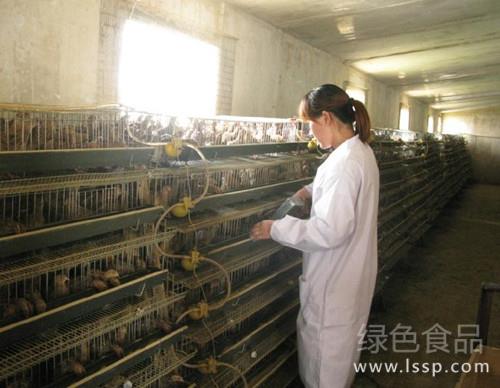
Winter management of quail
Keep warm and increase temperature:Temperature is directly related to quail egg production and egg quality. The optimal temperature for quail housing is 22-24°C; above 30°C or below 17°C, egg production is greatly affected. Therefore, measures to keep warm and increase temperature should be taken when raising quail in winter. At night, cover the quail cages with insulating material and increase cage stocking density, with 90-100 quail per sq m. Quail can also be raised in a double-layer plastic greenhouse (with 5-10 cm between the two films) built in a sheltered, sunny spot.
Increase lighting:Laying quail need 14-16 hours of light per day. In winter, artificial supplementary lighting is needed: equip every 30-40 sq m of quail housing with 4-6 40-watt electric lights, with the bulbs at a height of 2.2 m; turn the lights on 2 hours before dawn and off 2 hours after dark, maintaining stable light intensity and duration.
Maintain humidity:Laying quail are highly adaptable to changes in humidity inside the housing, and a relative humidity of 60-70% is best in winter. In addition, ventilation and air exchange should be carried out in a timely manner; in winter, quail housing is best ventilated by opening and closing skylights, and ventilation should be done at warm midday.
Balance nutrition:In winter, quail should be fed a complete, nutritionally balanced compound feed, and an appropriate amount of sand grains should be provided for the quail to eat freely to aid digestion. At the same time, provide clean warm water. Balanced winter quail feed formula: soybean meal 15%, concentrate 10%, fish meal 15%, corn 54%, bran 3.5%, bone meal 1.5%, dried grass meal 1%, with appropriate addition of vitamin A, vitamin B and vitamin D.
Keep the environment quiet:Keep cages, housing and feeding and drinking utensils clean and hygienic; fumigate and disinfect with 25 ml of formalin and 12.5 g of potassium permanganate per cubic meter. Every 7-14 days, disinfect the feeding utensils inside and outside the housing once with 2-3% Lysol solution. Quail are timid and easily startled; during daily feeding, egg collection, manure cleaning and adding water, movements should be gentle, and keepers should not be changed casually.