Pond hypoxia affects growth and causes reduced production. How to supplement oxygen in winter?
In winter, after fish fry and fish that have not reached market size are merged into the same pond, the pond density increases, and the oxygen demand of the fish rises. In addition, freezing causes the water surface to be sealed off. If oxygen is not supplemented in time at this point, it can easily lead to fish deaths and serious losses. Even if hypoxic fish do not die immediately, their growth will be affected, causing reduced production. Therefore, supplementing oxygen to fish ponds in winter can not only prevent fish from dying of hypoxia, but also benefit their growth the following year, thereby increasing production and improving returns. Effective methods for supplementing oxygen in overwintering fish ponds:
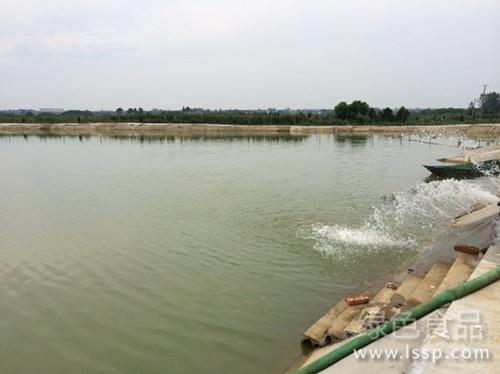
Supplementing oxygen by adding water to fish ponds
Supplementing oxygen by circulating water:Use cement pipes or plastic pipes to connect several nearby fish ponds, and use machinery to pump water from one pond to another, so that the water bodies of several fish ponds form a circulation. After the water body flows, it comes into contact with air more, and oxygen in the air dissolves into the water body, thereby increasing the dissolved oxygen content of the water body.
Supplementing oxygen by applying organic fertilizer:Applying 150-200 kg of organic fertilizer per mu to overwintering fish ponds can promote the growth and reproduction of phytoplankton in the water body, improve the photosynthetic capacity of the water body and the pond water temperature, and increase the oxygen content of the water body.
Supplementing oxygen by injecting nutrient-rich water:Inject water from other fish ponds with relatively nutrient-rich water quality into the overwintering fish pond. Nutrient-rich water contains more phytoplankton, and the dissolved oxygen content of the water body can be increased by enhancing the photosynthesis of phytoplankton.
Supplementing oxygen by stirring the pond water:In the severe winter season, the surface ice of the fish pond can be broken, and the bottom water of the fish pond can be stirred so that the lower water mixes with the upper water. The dissolved oxygen in the upper water is transported to the lower layer to supplement the dissolved oxygen in the lower water body.
Supplementing oxygen by changing the water regularly:Choose warm and windless days to change the water. Each water change should be one third of the pond water. Note that the water temperature difference must not exceed 3°C. Changing the water can restore the balance of dissolved oxygen and nutrients in the water body and reduce freezing of the pond water.
Supplementing oxygen by breaking ice and making holes:After a fish pond freezes, air circulation is blocked, and pond fish are prone to dying from hypoxia. If the ice on the fish pond can be broken in time and some new water is then injected, the problem of hypoxia caused by freezing in the fish pond can be solved. Generally, for a frozen fish pond, about 30 ice holes with a diameter of 20 cm are made per mu. For a severely frozen fish pond, about 40 ice holes with a diameter of 25 cm are made per mu, and after breaking the ice, an appropriate amount of new water should be injected, with underground warm water being better. For mild freezing, it is generally not necessary to break the ice; promptly injecting an appropriate amount of new water to prevent worse freezing is sufficient.