Prevent disease in river crabs in winter by clearing silt, drying the pond, draining and disinfecting, and planting grass, so they grow fast next year
In recent years, river crab diseases have become increasingly serious, causing major losses to river crab farming. To control crab diseases, start with prevention and begin in winter. The specific methods are:
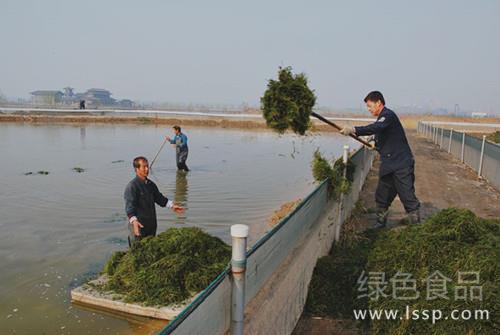
Planting aquatic plants in river crab ponds
1. Remove the silt at the bottom of the pond.The main components of silt are large amounts of residual bait, organic fertilizer, dead organisms, and biological excrement. Excessive silt easily causes water quality deterioration in summer and autumn, and also produces large amounts of organic acids, hydrogen sulfide, and ammonia, lowering the pH of the pond water and endangering the survival of river crabs. In particular, harmful bacteria, parasites, and other pathogenic microorganisms live in the silt, and once conditions are suitable, various pathogens spread widely. Therefore, it is necessary to use the idle period of the crab pond in winter to drain the pond water and remove the silt at the bottom of the pond by machinery or manual labor.
2. Freeze and sun-dry the pond bottom.After clearing the silt from the crab pond, clean the ditches and use machinery to pump water regularly, so that the pond bottom is subjected to severe freezing and sunlight for a period of time (preferably up to 1 month), in order to improve the soil condition at the pond bottom, allow some pathogens to be killed after freezing and sunlight, and create a good ecological environment for river crab growth the following year.
3. Build a proper inlet and drainage system.In addition to considering sufficient water sources and water physicochemical factors that suit river crab growth, are unpolluted, and carry no pathogens, it is also necessary to prevent the use of the same ditch for inflow and drainage, which would lead to mutual and repeated infection. Therefore, each crab pond is required to be able to drain its water independently. Where conditions permit, it is best to build a reservoir, and after the incoming water is settled, filtered, or disinfected, introduce it into the crab pond to prevent pathogens from being brought in with the water source.
4. Do a good job of drug disinfection.20 days before stocking river crab seedlings, disinfect with quicklime, bleaching powder, tea seed cake, and other drugs. For dry disinfection with quicklime, use 75-100 kg per mu. For disinfection with water, use about 150 kg per mu, dissolve the quicklime in water, and splash it over the whole pond. For disinfection with bleaching powder, use 15-20 kg; for disinfection with tea seed cake, generally carry it out with water present, using 25-50 kg per mu, crush the tea seed cake, soak it for 1-2 days, and then evenly splash the residue and liquid together over the whole pond. Disinfection with tea seed cake has the effect of fertilizing the water and promoting shell shedding and growth of river crabs, so it is best to use tea seed cake once more after disinfection with quicklime.
5. Do a good job of disinfecting the crab bodies.Before the crab seedlings are put into the pond, disinfect them with a suitable drug. A commonly used 15×10-6 to 20×10-6 concentration potassium permanganate solution is used to soak them for 20-30 minutes, or a 10×10-6 concentration bleaching powder solution is used to soak them for 10-15 minutes. During disinfection, flexibly control according to the size and physique of the crab seedlings, the temperature, and the safe concentration of the drug used.
6. Transplant aquatic plants.Aquatic plants can provide river crabs with a habitat and an environment for shell shedding, can also provide them with fresh plant feed, and can also reduce the ammonia nitrogen content in the water, increase dissolved oxygen, and improve water quality. Whether the aquatic plants are abundant is related to whether crab diseases can be prevented and whether the survival rate can be increased. Aquatic plant varieties: submerged plants: Elodea, Vallisneria, Potamogeton malaianus, Najas minor; floating plants: Alternanthera philoxeroides, water spinach, duckweed, etc. These plants are sown, transplanted, or transferred in winter and spring, so that the coverage rate of the crab pond reaches about 60%.