Five points to note in winter fattening of goslings: breed selection, temperature, humidity, first feeding, and disease prevention
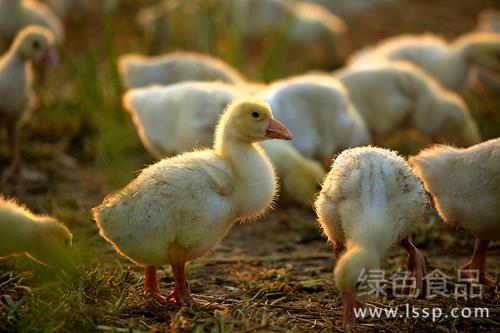
Goslings
1. Selecting goslings:Healthy goslings are moderate in weight, absorb the yolk well, have a well-closed navel, can stand after their down dries, have a loud call, bright and glossy feathers, are lively, and have bright, alert and nimble eyes. Poorly developed ones are lighter or heavier than normal, have a poorly closed navel, poor yolk absorption, a large or protruding navel with blood stains, are weak and listless, have a shrill and low call, dry down, and dull eyes. Such goslings are difficult to raise and should be culled.
2. Controlling temperature:Newly hatched goslings have sparse down and a poor ability to regulate their own body temperature, making it hard for them to adapt to changes in outside temperature, so temperature must be well controlled. In winter and spring, the brooding temperature is generally 28-30°C, then decreases by 1°C per day after 7 days. Once the temperature drops to 16-18°C, the goslings can be raised at normal temperature.
3. Regulating humidity:Dampness in the brooding room will affect the growth of goslings and easily lead to disease. If the brooding room is too dry, goslings will lose too much body moisture through respiration, causing poor absorption of the residual yolk in their bodies. The relative humidity in the brooding room is generally 55-60%, and after 14 days of age it is adjusted to 50-55%, with humidity adjusted according to temperature.
4. First feeding method:Goslings can be given their first feed 24 hours after hatching. Before the first feed, give them water with a small amount of glucose or vitamins added, to help clear the digestive tract, expel meconium, and supply nutrients. It is best to start goslings on half-cooked rice. After 5 days, add a small amount of green feed to the feed, and it is best to cut the green feed into fine shreds before feeding. Once the goslings begin to eat, scatter the feed on bamboo mats or plastic sheeting and let them eat freely, feeding 6-8 times a day, in small amounts but frequently.
5. Paying attention to disease prevention:In winter and spring, special attention should be paid to disease prevention. 2-3 days after hatching, each gosling should be injected with 0.5 ml of hyperimmune serum against gosling plague; after 5 days, inject 1 ml of gosling plague vaccine diluted 1:100; after 14 days, inject another 0.5 ml of gosling plague vaccine diluted 1:50, to prevent the outbreak of gosling plague. If conditions permit, an injection of fowl cholera bacterin can also be given to prevent fowl cholera. During the rearing period, do a good job of disinfection.