Improper feed handling causes dairy cow poisoning: what are the prevention and treatment methods?
In dairy cow farming, breeders mostly use various grasses, vegetables, agricultural by-products and industrial by-products as feed, and there are occasional cases of dairy cow poisoning caused by improper feed handling, which reduces milk yield and milk quality, and can even cause dairy cow death, affecting the development of the cattle industry. The prevention and treatment methods for dairy cow poisoning caused by feed are introduced as follows:
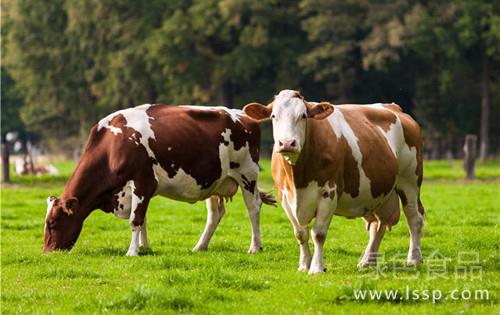
Dairy cow
Moldy corn causing disease:Feeding dairy cows moldy corn causes the affected cattle to have weakened or stopped rumination, cloudy corneas, yellow-stained mucous membranes, diarrhea, emaciation, and some have mental confusion, excitement and circling, leading to fainting and death.
Prevention: The moisture content of stored corn should be below 12.5%. For lightly moldy corn, it can be soaked in 10% quicklime solution to remove the mold before being used as feed. Treatment: Stop feeding immediately, administer 400-600 grams of magnesium sulfate by drenching with water, and intravenously inject 500-1000 milliliters of glucose saline and 50 milliliters of 40% urotropine.
Rotten sweet potato causing disease:When dairy cows eat rotten sweet potatoes containing fungal toxins, they become listless, rumination weakens or stops; constipation; rapid, difficult breathing, and in severe cases coma, spasms, and even death.
Prevention: Do not feed dairy cows sweet potatoes with black spot disease. Treatment: Stop feeding immediately. Mix 500 grams each of raw mung beans and honey well, administer orally once, or drench with 2000 milliliters of 0.1-0.2% potassium permanganate solution. For constipation, administer 400-600 grams of magnesium sulfate orally, and at the same time intravenously inject 50-1000 milliliters of 25% glucose, 10 milliliters of 10% caffeine sodium benzoate, and 250-500 milliliters of 5% sodium bicarbonate, etc.
Rotten cabbage causing disease:Cabbage and various wild grasses and wild vegetables contain nitrates, which after being cooked with the lid on or becoming heated and rotting will oxidize into nitrites, and dairy cows will be poisoned after eating them.
Prevention: Vegetable feed should preferably be fed raw; do not feed rotten green grass or green vegetables; vegetables and grasses that need to be cooked should be cooked and fed immediately, not left overnight, to prevent spoilage. Treatment: For mild poisoning, drench with 5-7 egg whites or 500 grams of milk; for severe cases in dairy cows, intravenously inject 150 milliliters of 1%-2% methylene blue solution, 1000 milliliters of 5% glucose, and 20 milliliters of 10% caffeine sodium benzoate. It is also possible to use 8-10 bottles of blue-black ink mixed with 1.5 times the amount of water and administer by drenching.
Distiller's grains poisoning:Distiller's grains contain acetic acid and alcohols, and feeding them in large amounts can also easily poison dairy cows. Symptoms are mental excitement, unsteady behavior, flushed mucous membranes, skin rashes on the skin around the udder under the abdomen, alternating constipation and diarrhea, accompanied by symptoms such as abdominal pain, paralysis and collapse.
Prevention: Control the amount of distiller's grains used; dry grains should not exceed 10%, fresh grains should not exceed 30%; moldy distiller's grains are prohibited, and for lightly moldy ones, they can first be mixed with 1% lime water before being fed to cattle. Treatment: Administer orally 1500 milliliters of 1% baking soda solution or soybean milk water, intravenously inject 1500 milliliters of 5% glucose, and for those with skin rashes, wash the affected area with 1% potassium permanganate solution.
Sprouted potatoes causing disease:When dairy cows eat sprouted potatoes or potato stems and leaves containing solanine, mild cases show weakened rumination, drooling, diarrhea, and rashes on the lower back; severe cases show stopped rumination, progressing from excitement and restlessness to depression, paralysis of the limbs, and convulsions until death.
Prevention: When feeding, remove the sprouted, green and rotten parts, cook thoroughly to lose water, and match with other feeds; do not feed potatoes to pregnant dairy cows. Treatment: Wash the stomach with 0.1% potassium permanganate solution, administer orally 1000 milliliters of tannic acid solution, and for severe cases in dairy cows intravenously inject 1500 milliliters of 5% glucose and 10 milliliters of 10% caffeine sodium benzoate.