Multiple problems in piglet management that cause slow growth and countermeasures
Farmers raising pigs, especially raising piglets, encounter many problems, which cause piglets to grow slowly and even become runt pigs. Below, the editor analyzes the causes of slow growth in piglets and the countermeasures.
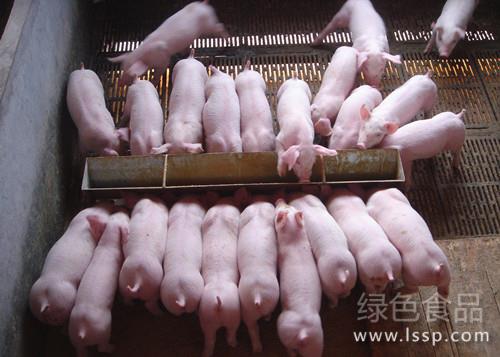
Piglets
1. Improper weaning.Farmers raising piglets mostly adopt the one-time weaning method, and after weaning, the piglets are immediately brought to market. The sudden change from a life centered on the mother with littermates living together in stable and comfortable conditions makes it difficult for piglets to adapt for a time, which affects weight gain. The number of sucklings should be gradually reduced starting 5 to 6 days before weaning until weaning is complete. This method is beneficial to piglet growth.
2. Failure to supplement feed in time.If piglets in the suckling stage are not given supplemental feed in time, then after weaning they cannot eat well, and with no milk to supplement them, growth slows and development stops. Generally, supplemental feeding should begin at 7 days of age, so that when the sow's milk production declines, feed can formally be supplied to make up for the insufficient milk output of the sow. At first, feed mainly aromatic, sweet, crisp, and easily digestible feed, then gradually switch to normal feed.
3. Unreasonable feed and feeding methods.After weaning, piglets not only cannot get sow's milk, but the feed quality is also poor. The feed contains too much water and too little solid matter, and the number of daily feedings drops sharply from 6 to 8 times before weaning to 3 times. These drastic changes block normal development of piglets. Therefore, when buying pigs, ask the seller in detail about the feeding and management of the piglets, so as to ensure feed quality and quantity with a gradual transition, a gradual transition among concentrated, green, and rough feed, and a gradual reduction in feeding frequency from many to few.
4. Environmental conditions change too much.Before weaning, piglets are centered on the mother and live together with littermates. After weaning, generally one pig per pen, and piglets cannot adapt in a short time. Especially in winter, combined with cold, they eat poorly and sleep poorly, and are prone to many diseases and even death. Therefore, when buying pigs, ask as many questions as possible, try to create a comfortable living environment for the piglets, and make changes gradually.
5. Extensive management.At present, farmers generally raise pigs one per pen, with a monotonous life. Some pigs eat, sleep, and defecate in the same place, and coupled with infrequent cleaning and bedding of the pen, this creates a filthy environment and extremely poor sanitary conditions. Especially in winter, it easily causes pig colds, diarrhea, and other diseases, seriously affecting pig health and hindering growth and development. In actual pig raising, pigs can be grouped 3 to 6 per pen according to how fast they eat and their temperament. In this way, the pigs compete for food and grow quickly. Also do a good job of training them so they eat at a fixed spot, defecate and urinate at a fixed spot, and sleep at a fixed spot, keeping the environment clean and sanitary.
6. Wrong timing for epidemic prevention and castration.Farmers often carry out epidemic prevention and castration at the same time as purchasing pigs. In this way, the three adverse factors of weaning, epidemic prevention, and castration are all imposed on the piglets at once, so that the piglets cannot regain body weight for a long period, seriously affecting normal growth and development, causing slow growth and further forming runt pigs. It is recommended that for piglets not kept for breeding, male piglets be castrated at 20 days of age and female piglets at 30 to 40 days of age. To prevent certain infectious diseases, swine fever vaccine can be injected before 30 days of age, and Danish vaccine can be given at 3 months of age.