What is phosphate fertilizer, and what are the common types?
What is phosphate fertilizer? What kinds of phosphate fertilizer are there? What are their characteristics? We ask knowledgeable readers to help explain. Phosphate fertilizer refers to a single-element chemical fertilizer that contains the element phosphorus and mainly supplies plants with phosphorus as a nutrient. Zhongdiwang has compiled the functions and types of phosphate fertilizer, listed in detail below for readers' reference....
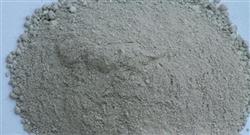 What is phosphate fertilizer? What kinds of phosphate fertilizer are there? What are their characteristics? We ask knowledgeable readers to help explain
Phosphate fertilizer refers to a single-element chemical fertilizer that contains the element phosphorus and mainly supplies plants with phosphorus as a nutrient. Zhongdiwang has compiled the functions and types of phosphate fertilizer, listed in detail below for readers' reference.
The role of phosphate fertilizer:
Role one,Phosphorus can promote cell division and accelerate the growth of crop sprouts and root systems.
Role two,Phosphorus can promote crop respiration and the absorption of water and nutrients by crops, improve crops' water use efficiency and their ability to get through short droughts during water-deficient periods.
Role three,Phosphorus can promote the metabolism, synthesis and transport of carbohydrates, proteins and fats in crops, which helps lower the moisture content of grains at the maturity stage and allows crops to mature earlier. Generally, sufficient phosphorus nutrition can make wheat mature 4~7 days earlier, and tomato flowering 8~10 days earlier. It can also promote flower bud differentiation and flowering and fruiting in crops such as melons, solanaceous vegetables and fruit trees, and increase the fruit-setting rate of crops.
Role four,Phosphorus can enhance crops' stress resistance, improve their cold resistance, drought resistance, saline-alkali resistance and disease resistance, and improve product quality. The reason phosphorus can improve crops' drought resistance is that phosphorus can increase the water-holding capacity of cell structures, keep them in a colloidal state, reduce water loss from cells, and increase the viscosity and elasticity of protoplasm, which strengthens the resistance of crop protoplasm to local dehydration. At the same time, phosphorus can promote plant root development, increase the area of contact with soil nutrients and strengthen the use of soil moisture, reducing the threat caused by drought. Phosphorus can increase the content of soluble sugars and phospholipids in plants; soluble sugars can lower the freezing point of cytoplasm, while phospholipids can enhance cells' adaptability to temperature changes, thereby enhancing crops' cold resistance.
Phosphorus can increase the content of inorganic phosphate salts in plants, and these phosphate salts mainly exist in the forms of dihydrogen phosphate and hydrogen phosphate ions, often forming a buffer system, so that the protoplasm in cells has buffering capacity against acid-base changes. When the external environment undergoes acid-base changes, the buffering effect of the protoplasm can still keep it within a relatively stable range, which is beneficial to the normal growth and development of crops. Therefore, applying phosphate fertilizer on saline-alkali land can improve crops' saline-alkali resistance.
Role five,Phosphorus can promote the growth of the root systems of leguminous crops, shorten the time required for the development and activation of root nodules, increase the number, volume and nitrogen assimilation of root nodules, and improve the yield and nitrogen content of leguminous crops.
Types of phosphate fertilizer:
Type one, water-soluble phosphate fertilizer:Such as ordinary superphosphate, triple superphosphate and ammonium phosphate (monoammonium phosphate, diammonium phosphate). The main component of the above products is monocalcium phosphate, which is easily soluble in water and has a relatively fast fertilizer effect. It is suitable for various soils and various crops, but is best used on neutral or calcareous soils.
Type two, citrate-soluble phosphate fertilizer:Such as precipitated phosphate fertilizer, steel slag phosphate fertilizer, calcium magnesium phosphate fertilizer, defluorinated phosphate fertilizer, calcium hydrogen phosphate, etc. The main component is dicalcium phosphate, which is insoluble in water but soluble in a 2% acid solution, and has a relatively slow fertilizer effect. In calcareous soil, it combines with soil calcium and transforms toward insoluble phosphate, lowering the availability of phosphorus, so it is suitable for acidic soil.
Type three, sparingly soluble phosphate fertilizer:Such as bone meal and phosphate rock powder. The main component is tricalcium phosphate, which can only dissolve in strong acid and is insoluble in water. After being applied to soil, it relies on acids in the soil to slowly dissolve it before it can become a form usable by crops. Its fertilizer effect is very slow, but its residual effect is relatively long. It is suitable for use as a base fertilizer in acidic soil, and can also be composted with organic fertilizer or applied in combination with chemically acidic and physiologically acidic fertilizers.
Type four, mixed-soluble phosphate fertilizer:Generally there are nitric phosphate fertilizers, etc. It is a nitrogen-phosphorus binary compound fertilizer, most suitable for application on dry land. Application in paddy fields and acidic soil can easily cause denitrification losses.
What are the common nitrogen fertilizers
What are the effects of magnesium sulfate