When is the best time to apply potassium fertilizer to grapes?
When should potassium fertilizer be applied to grapes? How can it be used well? Potassium fertilizer is very important throughout the entire growth period of grapes, especially during fruit growth, when the demand is even greater. Therefore, grapes are known as a "potassium"-loving crop. Potassium fertilizer can promote grape fruit enlargement and ripening, improve variety quality and storage tolerance, and promote branch thickening...
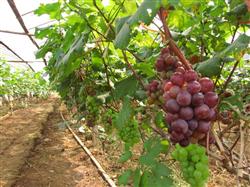
When should potassium fertilizer be applied to grapes? How can it be used well?
Potassium fertilizer is very important throughout the entire growth period of grapes, especially during fruit growth, when the demand is even greater. Therefore, grapes are known as a "potassium"-loving crop. Potassium fertilizer can promote grape fruit enlargement and ripening, improve variety quality and storage tolerance, promote branch thickening and maturation, and enhance their cold resistance, drought resistance, high-temperature tolerance and pest and disease resistance.
From grape fruit set to the veraison stage, according to the orchard soil fertility, apply 5-10 kg of potassium sulfate per mu of vineyard as a topdressing, or spray a potassium dihydrogen phosphate solution on the leaves, once every 7-15 days, for 2-3 consecutive sprays. This has a significant effect on promoting grape enlargement, early ripening, accelerating vine aging, and improving grape resistance. At the same time, it can also significantly inhibit major diseases such as grape anthracnose and black pox.
When using foliar spraying, it should be done before 9 a.m. and after 5 p.m.; spraying should not be done during the high-temperature period at noon. Both sides of the leaves should be sprayed evenly, and 60 kg of fertilizer solution per mu is ideal.
Click to get more nitrogen, phosphorus and potassium application techniques
Click to get more chemical fertilizer application techniques
Click to get more grape cultivation techniques