Diagnosis and Treatment of Goose Egg Drop Syndrome in Female Geese Causing Weight Loss, Reduced Egg Production, Exhaustion and Death
Goose egg drop syndrome in female geese is caused by Escherichia coli and occurs during the laying period. If prevention and control are not adequate, the mortality rate reaches 50%-80%, and can be as high as 100%, seriously threatening female goose farming, so great attention should be paid to it.
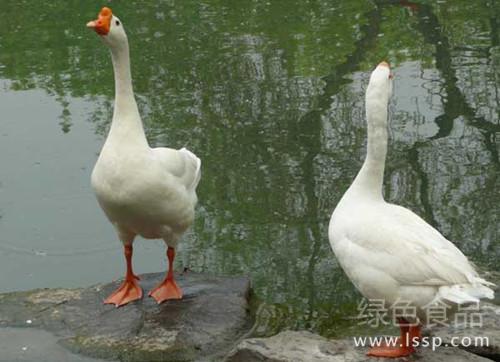
Female goose
I. Pathogen and epidemiology:
The pathogen is distributed in soil, litter, pond water, poultry houses and other places. Sick geese and their feces, contaminated feed, drinking water, ponds, equipment, premises, hatching eggs, etc. are sources of infection. The pathogen enters the body of female geese through the digestive tract and respiratory tract. Female geese are mainly infected by mating with bacteria-carrying ganders. When male and female geese mate in contaminated water, the female geese are susceptible to infection and disease. Female geese are most susceptible to infection and disease during the laying period, especially at the peak of laying and in autumn, winter and spring. Ganders can be affected in all four seasons. Ganders play an important role in the spread of this disease, and once the female geese finish laying, the disease stops spreading. Malnutrition in female geese, lack of vitamins and minerals, excessive stocking density, poor hygiene in goose houses, and poor ventilation all promote this disease.
II. Symptoms and diagnosis:
Female geese with this disease are mostly affected shortly after laying. They are listless, have poor appetite, are reluctant to move, and after entering water they are unwilling to swim and stay away from the flock. The feathers around the vent are often stained with foul-smelling excrement; the excrement contains sticky protein-like material, coagulated protein and small yolk clots. In the early stage of the disease, some female geese lay soft-shelled or thin-shelled eggs, and egg production decreases; as the disease worsens, laying stops, they stop eating, become dehydrated and emaciated, and if not treated in time, most female geese die of exhaustion. A small number of female geese may recover, but they will no longer lay eggs and should be culled as soon as possible.
III. Comprehensive prevention and control
(I) Prevention
1. Clean the goose house and its surroundings once every 2-3 days, and replace the litter once every 2-3 days. 2. Disinfect the pond water with quicklime once every 10-15 days. 3. Disinfect the goose house, its surroundings and equipment with 3%-5% Lysol solution once every 5-6 days. 4. Do not use eggs laid by sick geese for hatching. 5. Before incubation, wash suspicious hatching eggs with clean water, soak them in 0.1% benzalkonium bromide solution for 5 minutes, then rinse with clean water, and let them dry before use. 6. Examine ganders one by one, and cull all those with lesions on the external genitalia. 7. Appropriately reduce the stocking density, improve ventilation in the goose house, and do a good job of cold protection and warmth in winter and spring. 8. Give female geese an intramuscular injection of 1-1.5 ml of inactivated goose egg drop syndrome vaccine per bird 15 days before laying, with a protection period of up to 2.5-3 months. 9. Inject each gander subcutaneously or intramuscularly with 0.6-1 ml of formaldehyde-inactivated Escherichia coli vaccine isolated from affected goose flocks, with an immunization period of up to 3 months.
(II) Treatment
1. Western medicine treatment: (1) Mix norfloxacin into the feed at 0.01% and use for 3 consecutive days. (2) Inject kanamycin intramuscularly at 10 mg per kg of body weight once a day for 3-5 consecutive days. (3) Inject each sick goose intramuscularly with 150,000-200,000 units of streptomycin twice a day for 2-3 consecutive days.
2. Traditional Chinese medicine treatment: (1) Take 100 g each of Phellodendron bark, Coptis rhizome and rhubarb, decoct in an appropriate amount of water, collect the liquid, dilute it 10 times, and let 500 geese drink it freely, 1 dose per day for 3 consecutive days. (2) Take 50 g each of licorice and Isatis root, 40 g each of gentian, Chinese pulsatilla root, honeysuckle and dandelion, and 30 g each of Coptis fibrous root, Phellodendron bark, Atractylodes rhizome, magnolia bark, tangerine peel, ageratum, plantain and poria (this dose is for 1000 ganders and female geese), decoct twice in an appropriate amount of water, add brown sugar in winter and white sugar in summer, and let the geese drink it freely, 1 dose per day for 3 consecutive days.