Captive sheep have high nutritional needs in winter, how can they safely overwinter?
In winter, the cold wind rages and the temperature difference between day and night is large, so sheep lose a lot of body heat. This also coincides with the gestation period of most ewes and the first overwintering period of growing sheep, so the flock's demand for nutrients increases. Once feeding is improper, the flock is prone to becoming thin and losing body condition.
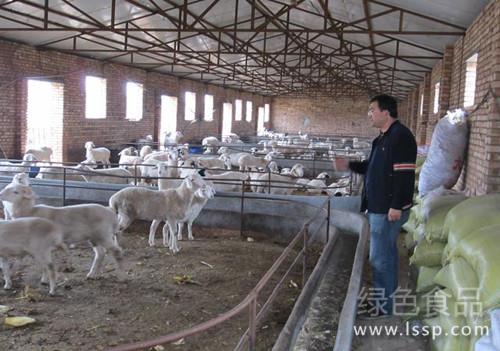
Sheep captivity
Requirements for sheep shed construction:
Site selection. Sheep prefer dryness and fear dampness. When building a sheep shed, choose a site that is sheltered from the wind and faces the sun, with high and dry terrain and good soil drainage. At the same time, there should be a clean water source nearby, preferably with green grassland. The breeding area should be far from residential areas, and strict isolation measures should be taken, with a disinfection pool set up at the entrance and exit of the site.
Basic construction requirements. Moderate area: sheep should not be crowded inside the shed and can move freely. Generally, design according to 1.5-2 sq m per breeding ram, 0.8-1 sq m per ewe, 2-2.5 sq m per pregnant or lactating ewe, and 0.5-0.6 sq m per young sheep. Use local materials: materials can include hollow bricks, red bricks, steel frames, wooden poles, cement poles, mud tiles, etc., with durability as the standard. Ventilation and light transmission: the window area should be no less than 1/5 of the sheep shed area, and the sunny side of the sheep shed can be open. Heat preservation and moisture proofing: in winter, the temperature in the sheep shed must not be lower than 0°C, and the lamb shed must not be lower than 10°C. The ground inside the sheep shed should be 20-30 cm higher than the ground outside.
Types of sheep sheds:
Single-slope sheep shed. A simple sheep shed, suitable for small-scale sheep-raising areas. The back wall of the sheep shed is 1.8-2 m high, and an exercise yard is set up on the sunny side. The ground of the sheep shed is raised 20-30 cm with soil, spread into a gentle slope, and kept dry inside. In winter, spread bedding straw and change and sun-dry it frequently.
Elevated sheep shed. This type of sheep shed has higher requirements and is suitable for large-scale sheep-raising areas. The sheep shed is double-sloped, with a height of 2.5 m, an internal walkway, and an external exercise yard. To keep the shed dry and clean, an elevated pen floor can be set up 50 cm above the ground. The pen floor is made into a grid style with steel bars and cement tops. The gaps should preferably be 1-1.5 cm so that manure can be discharged. A slope can be set between the exercise yard and the ground inside the shed (the slope ratio should be no greater than 1/2), allowing sheep to enter and exit freely.
Sheep shed facilities:
Exercise yard. Located on the sunny side of the sheep shed, with an area 2-3 times that of the sheep shed, requiring dry ground and convenient drainage. Sheep are lively and like to climb high, so a high platform can be set up.
Feed trough. Sheep love cleanliness and will not eat grass that has fallen on the ground or dirty grass. To reduce waste and use forage reasonably, feed troughs can be set up, hung on the shed wall or placed on the ground inside the shed, and the height of the trough should be level with the sheep's back.
Water trough. To ensure sufficient clean drinking water, a water trough can be set up in the exercise yard, built with bricks and cement. At the same time, to facilitate cleaning and changing water, drainage holes should be set up.
Isolation shed. A special isolation sheep shed should be built and kept at a distance from the sheep shed. After sheep become ill, promptly place them in the isolation shed for observation and treatment, and return them to the flock after recovery; newly purchased sheep, in order to prevent the spread of epidemic diseases, should also first be raised in the isolation shed. After a period of time confirms there is no epidemic disease, return them to the flock. Sheep should be disinfected before and after entering and leaving the isolation shed.
Prepare sufficient concentrate and roughage. Large amounts of roughage such as corn stalks and rice straw should be stored and used. Techniques such as crushing and processing with bacterial-enzyme compound biological agents should be adopted to improve nutrition and utilization rate. Change the methods of “gnawing on the stick” and “eating noodles”, that is, throwing whole bundles of corn stalks and large piles of dry grass into the sheep pen for feeding. If the number of sheep is small, the grass can be put in a basket and the basket hung up for feeding; if the number of sheep is large, a self-made hay rack can be used to feed grass, and the grass can also be tied up and hung at a height the sheep can reach.
Supplementary feeding for sheep
Timely supplementary feeding:
During the winter withered-grass period, it is difficult to meet the nutritional needs of the flock by grazing alone, so half-day grazing and half-day supplementary feeding are advisable. This can reduce physical consumption and is also beneficial for maintaining and gaining body condition. Ensure normal gestation, lambing, lamb rearing and growth of sheep. Reference formula for concentrate: cornmeal 60%-70%, bran 10%-20%, oilseed meal 10%-20%. For the prepared concentrate, each adult sheep should be supplemented with no less than 600 grams per day. In addition, pay attention to adding salt, vitamins and trace elements; for lambs, breeding rams and pregnant ewes, also add green and juicy feed such as carrots.
Timely adjust the flock:
In winter, the climate is harsh, feeding conditions are poor, and the living environment for sheep is not good. Old, weak, sick and disabled sheep should be culled in time to reduce feeding and management pressure, reduce losses, and improve the production level.