Low winter temperatures make laying hens stop producing eggs easily; how to promote continuous laying
To keep laying hens from stopping production in winter, it is necessary to meet their requirements for temperature, light and nutrition, and to adopt targeted feeding and management measures.
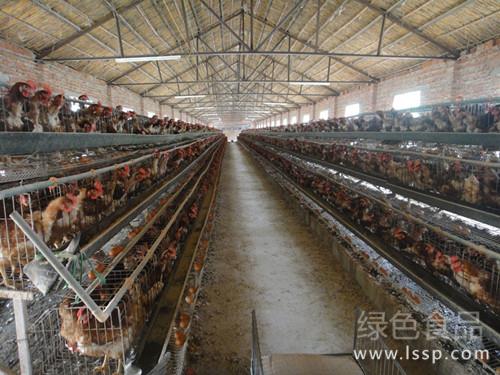
Laying hens
1. Cold protection and heat preservation: the suitable living temperature for laying hens is 18°C, and in winter the coop temperature should be kept above 10°C as much as possible. Windbreaks should be set up around the coop, plastic sheeting hung over doors and windows, and cracks in the walls sealed to prevent "drafty wind" from entering the coop.
2. Increase lighting: light not only strengthens the constitution of laying hens but also promotes the secretion of pituitary hormones, making the hens vigorous in egg production. Therefore, in winter when daylight hours are short, artificial lighting should be added to stimulate the hens to lay more eggs. Usually electric lights are installed in the coop so that the laying hens receive about 15 hours of light. You can also use the method of turning the lights on early in the morning and off late at night, so that the laying hens receive 0.5-1 hour more light in winter than in summer and autumn.
3. Increase feeding frequency: winter temperatures are low, and laying hens must take in enough nutrition from the feed to resist the cold so as to ensure high production performance. Feeding frequency can be increased to encourage the hens to eat more.
4. Increase nutrition: winter is cold, and laying hens consume more energy themselves, which must be replenished from the feed. Therefore, in winter the energy level of the laying hen feed should be appropriately raised. In addition, appropriately increasing the amount of vitamins in the feed can raise egg production. According to experiments, doubling the amount of vitamin A and D3 in the feed can increase the laying rate by 3%-5%.
5. Increase disease prevention and treatment: winter is the epidemic season for respiratory diseases in chicken flocks. Once symptoms are found, medication should be used immediately for early prevention. At the same time, laying hens can also be disinfected once every 5-7 days with disinfectants such as Baidusha.