Breeding Goose Raising and Management Techniques: Raise Breeding Geese Well to Produce More Hatching Eggs
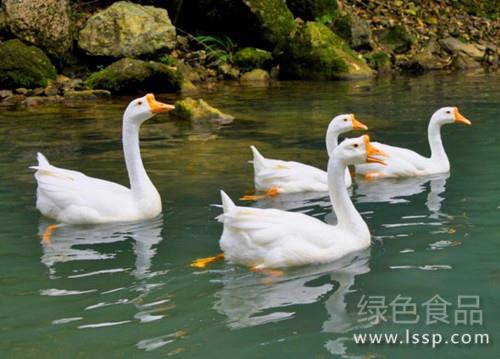
Breeding geese
Selection of breeding geese and breeding timing: The purpose of raising breeding geese is to obtain a large number of high-quality hatching eggs for renewing the goose flock and producing meat goslings. Hatching eggs or goslings should be introduced from reliable, disease-free breeding goose farms. Ask the farm owner about the epidemic situation, and introduction must be from healthy goose flocks confirmed to be free of infectious disease outbreaks. For raising breeding geese, select from goslings hatched in March to April each year, then carry out three rounds of reselection at 70-80 days of age, 130 days of age, and before laying; the remaining breeding geese can then be raised. Goslings hatched in different seasons have a great impact on later production performance. Goslings hatched in early spring, as daylight gradually lengthens, the climate becomes warmer, and green grass flourishes, can eat high-quality tender grass, and grazing also gives them full exercise. Goslings in this period grow fast, have strong constitutions, start laying early, and bring good economic returns.
Reasonable male-to-female ratio: Different goose breeds have different male-to-female ratios. Large breeds are 1:4-5, small breeds are 1:6-7, and medium breeds are 1:5-6. In winter or early spring, with old ganders, low feeding levels, and weakened sexual activity of ganders, the male-to-female ratio can be reduced accordingly. With artificial insemination technology, the male-to-female ratio can be increased to 1:15-20, and the fertilization rate can reach more than 90%. In production practice, the specific male-to-female ratio should be adjusted according to the fertilization rate of hatching eggs. If there are too many ganders, competition for mounting affects mating, and the fertilization rate instead declines. During the breeding season, if the fertilization rate is low, mainly check the ganders; those that are unqualified individuals or have poor libido should be replaced immediately.
Increase nutrition to raise the laying rate and fertilization rate: To improve the laying rate and fertilization rate of breeding geese, fully consider the nutrition needed by female geese for laying. A mixed concentrate with 15%-16% crude protein should be prepared as the ration for breeding geese. During the reproduction period, feed each goose 250-300 grams of mixed concentrate per day according to body weight. To meet the vitamin needs of breeding geese, in addition to grazing, feed more vitamin-rich green and succulent feed (such as cabbage, carrots, ryegrass, etc.). During the laying season, drive the breeding geese into ponds or ditches in the morning and afternoon to play in the water and mate, so as to improve the fertilization rate of hatching eggs.
Strengthen management work: 1. The goose house must be kept dry and clean. It is best to install a net frame inside the goose house so that breeding geese spend the night on the net, reducing the occurrence of disease. 2. Set up nesting boxes. Specifications are 10 cm deep, 30 cm wide, and 1 m-2 m long. Set up one nesting box for every 30-40 geese. The litter in the nesting boxes should be clean straw cut into 3 sections. The nesting boxes must not be exposed to rain or sun. Hatching eggs must not be left outside overnight, to ensure the quality of hatching eggs. 3. Pay attention to ventilation and air exchange inside the house to keep the air fresh. Do a good job of preventing cold in winter and preventing heat and cooling in summer, and keep the geese quiet. 4. Pay attention to reasonable density, preferably 2-3 geese per sq m. Excessive density affects the growth and development of breeding geese.