Key Points for Overwintering and Disease Prevention of Freshwater Shrimp: Good Management Increases Benefits
Overwintering freshwater shrimp is an important part of freshwater shrimp farming, and doing a good job in shrimp disease prevention and control is an important measure to improve the benefits of freshwater shrimp farming.
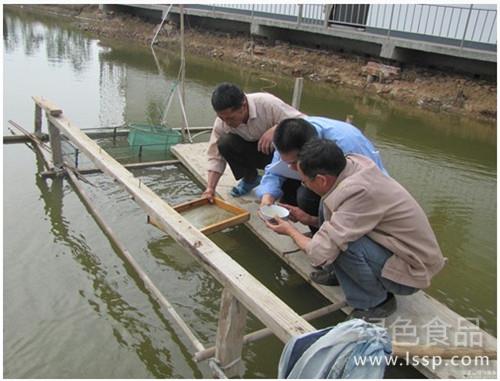
Freshwater Shrimp Overwintering Monitoring
I. Freshwater Shrimp Overwintering:
Freshwater shrimp overwintering is divided into juvenile shrimp overwintering and parent shrimp overwintering. Juvenile shrimp refers to shrimp bred in August to September that have not yet grown to market size by December; through overwintering, they are kept for use as stocking shrimp seed in March to April of the following year. Parent shrimp are shrimp selected and kept for breeding the following year, allowed to overwinter safely and intensively cultivated to meet the requirements for spawning and reproduction. Therefore, doing a good job in freshwater shrimp overwintering is an important part of freshwater shrimp farming.
(1) Choose the overwintering method and make preparations:
Freshwater shrimp can overwinter in ponds or in net cages. When using ponds for overwintering, choose relatively regular ponds that are sheltered from the wind and face the sun, with a water depth of more than 1.5 m and abundant aquatic plants. For net cage overwintering, in addition to selecting good net cages, also choose locations with relatively deep water, small wind and waves, and slight-flow river channels or harbor branches for setting the net cages. Freshwater shrimp overwintering begins in December of the previous year and ends in March of the following year, lasting as long as 4 months. During overwintering, freshwater shrimp generally hide in the aquatic grass at the bottom of the pond or cage and rarely move. To provide a good warm environment for freshwater shrimp overwintering, 150 to 200 kg of aquatic plants and 25 to 35 kg of willow roots should also be placed in the pond; for net cages, this depends on the situation.
(2) Reasonable stocking to improve the survival rate:
Overwintering parent shrimp should be selected as large shrimp with robust physique, complete appendages, and standard body shape. The size of female parent shrimp is 200 to 500 shrimp/kg. For males, it is 140 to 150 shrimp/kg, and female and male shrimp can be matched at a ratio of 2:1. After parent shrimp are selected, 15 to 25 kg can be stocked per mu of pond or per 70 sq m of net cage. For juvenile shrimp overwintering, stock 20 to 40 kg of juvenile shrimp sized 2000 to 3000 shrimp/kg per mu of water surface or per 70 sq m of net cage. Stocking usually begins in mid-to-late December, and stocking should be done on clear, warm days to improve the survival rate.
(3) Scientific feeding and good management:
During the overwintering period, parent (juvenile) shrimp still need a small amount of food to maintain life and vitality. For this reason, throughout the entire freshwater shrimp overwintering period, feeding must be carried out consistently. Usually on clear, warm days, feed 1 to 2 kg of commercial bait each time per mu of water surface or per 70 sq m of net cage, once every 7 to 10 days. The bait should be small in amount but fine to ensure the safe overwintering of parent (juvenile) shrimp. A dedicated person should be assigned to patrol the pond or cages regularly, check the overwintering condition of parent (juvenile) shrimp, and do a good job in preventing pollution, cage sinking, and enemies. In severe winter, also prevent the pond water from freezing. Once freezing is found, break it or drill holes in time to strictly prevent parent (juvenile) shrimp from dying of oxygen deprivation and suffocation, thus enabling parent (juvenile) shrimp to overwinter safely.
II. Freshwater Shrimp Disease Prevention and Control:
Freshwater shrimp have strong disease resistance and diseases occur relatively rarely. However, if feeding management is poor, disease is still hard to avoid. The main shrimp diseases are gill rot disease and red body disease.
(1) Gill rot disease: The gill filaments of diseased shrimp turn black and soon become moldy and rotten. Prevention and control method: prepare according to the dosage of 2 g bleaching powder per cubic meter of aquaculture water; after dissolving in water, splash it over the whole pond. To ensure that the dissolved oxygen in the pond (cage) water is above 4.8 mg/L, residual bait and dirt in the pond (cage) should be cleaned up thoroughly to keep the aquaculture environment safe, so as to avoid polluting the water quality and causing gill rot disease in freshwater shrimp.
(2) Red body disease: In the early stage of the disease, the tail stalk of diseased shrimp is red in color; afterward the redness gradually spreads to the entire abdomen, and finally affects the head and thorax and causes death. This disease mostly occurs 1 to 3 days after seedling release, clearing wild fish, or selective catching, and is mostly caused by improper handling. Prevention and control method: give priority to prevention; once it occurs, drugs have no obvious curative effect. Prevention methods: during handling, movements should be gentle and carried out with water, and freshwater shrimp must not be piled up or pressed. Try to ensure that freshwater shrimp remain intact and are not damaged.