Few fish diseases in winter but hard to spot: master the key points of fish overwintering management
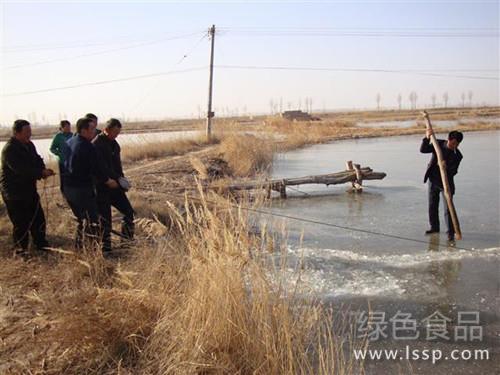
Fish overwintering
1. Do a good job of fish body inspection and prevent diseased fish from overwintering:
As water temperature drops, microbial reproduction weakens. Before and after overwintering, fish diseases noticeably decrease, but some fungi and parasites adapted to low temperatures still lurk in the water and can cause saprolegniasis and gill rot in fish at any time, especially in ponds after seining. However, because fish activity weakens in winter and due to the effect of water temperature, diseased fish are very hard to spot on the water surface. If fish disease is found after the pond freezes over, treatment becomes troublesome and the therapeutic effect is poor. Therefore, pond medication work should be done well before overwintering. The method is: on a warm afternoon, splash 200 grams of bromochloro hydantoin per mu; after 2 to 3 days, splash 200 milliliters of Chelunmie (matrine) per mu, which can effectively prevent disease.
2. Increase fish body fat and improve fish constitution:
Overwintering fish all lose weight to varying degrees. The four major Chinese carps generally lose about 5%, and especially grass carp and bream decline even more. This is because after fish stop feeding, they enter a semi-hibernation state. Although low temperatures mean they do not need large amounts of energy, they still have some activity, which forces their internal organs to use part of their energy to sustain life. Therefore, in the 20 days or even one month before fish stop feeding, some high-quality concentrated feed should be properly fed, such as carp feed with protein above 32% and grass carp feed with protein above 28%. It is best to add about 5% corn to the feed to increase the effective sugar content of the feed, thereby increasing fish fat and increasing fish muscle thickness, which can avoid frostbite caused by severe cold and effectively reduce the problem of “weight loss”.
3. Strengthen pond water management and improve water quality:
After a fish pond freezes over, the water temperature at the bottom of the pond is not necessarily low. Residual bait, feces, and dead plankton and aquatic animals and plants deposited at the bottom of the pond still ferment and decompose, which both consumes dissolved oxygen in the water and produces harmful substances such as ammonia nitrogen and hydrogen sulfide. In addition, factors such as low winter temperatures, short light duration, reduced microorganisms, and lower dissolved oxygen make it difficult for harmful substances to decompose. Therefore, eliminating harmful substances in water at low temperatures is more difficult than in summer. So, for overwintering ponds when the water temperature is not lower than 18°C, splash 0.5 to 1 kg of the biological preparation EM bacteria per mu, or splash 1 kg of “magnetic water quality improver” (aluminum sulfate and strong body complex) per mu. When the fish have completely stopped feeding, use 150 to 200 milliliters of “Lunchong Kuaike” (main ingredient: acetic acid) per mu to prevent excessive occurrence of zooplankton in the water body, thereby ensuring the quality of the overwintering water body.
4. Delay the time of stopping feeding and feed reasonably in winter:
Common warm-water fish show obvious signs of stopping feeding when the water temperature is below 10°C, and most fish farmers also stop feeding. However, experiments show that when these fish are given a very small amount of bait every day, they can still quickly swallow it within a short time. It can be seen that the later the fish stop feeding in winter, the better. Even after they stop feeding, feed a small amount of feed on clear afternoons.
5. Do a good job of water body aeration to ensure safe overwintering:
To let fish overwinter safely after the water surface freezes, it is recommended to move the aerator toward the vicinity of the feeding platform before freezing, and turn it on regularly for about half an hour every day. This can ensure that the area near the aerator does not freeze even in severe cold, so as to achieve long-term ventilation and gas exchange under the ice and increase dissolved oxygen in the water body. In addition, for ponds with seepage, new water must be added regularly to ensure the water depth under the ice is 1 to 1.5 m. When adding water, add it from the bottom upward, and never form a second layer of ice, to prevent fish from frostbite and freezing to death. At the same time, reasonably clear snow on heavy snowy days to ensure photosynthesis of phytoplankton under the ice.