Meat pigeons have different nutritional needs at different stages, a detailed explanation of the new staged breeding technology
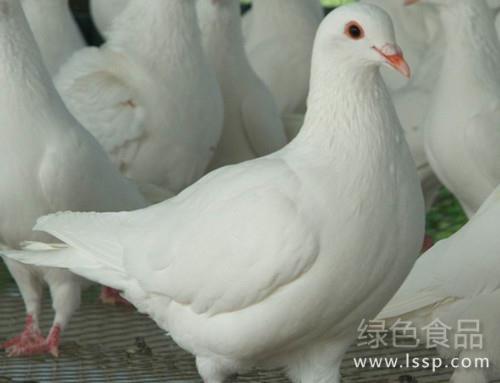
Meat pigeon
1. Feeding management:
(1) Breeding pigeon rearing. Breeding pigeons have strong disease resistance and rarely get sick. Apart from supplying sufficient food, water and health grit, the most important thing is the management of the parent pigeons' incubation and squab rearing. Each time the parent pigeons can lay 2 eggs, with a one-day interval, and one production cycle is 40 days. If they are only allowed to lay eggs without incubating, they can lay 6 eggs per month (3 times). About 5 days after the eggs are laid, start candling the eggs by hand and cull the infertile eggs; at about 13 days, candle them once more to prevent dead embryo eggs. After removing the infertile or dead embryo eggs, the remaining eggs must be incubated in time.
(2) Squab management. After hatching, the squabs are fed alternately by the male and female pigeons, and after 7 days they gradually switch to being fed full pellet feed. To increase the survival rate of squabs and fatten them quickly, the squabs should be carefully managed. If two squabs are found to be different in size, it may be caused by indigestion, and the smaller squab should be force-fed 3 health grit pellets the size of soybeans and half a yeast tablet; for squabs with diarrhea, feed each one half a tablet of oxytetracycline and 1 pill of diquanet. In addition, the pigeon house environment should be improved, with regular ventilation and air exhaust, and colds should be prevented to ensure the healthy growth of the squabs.
(3) Young pigeon rearing. Before breeding pigeons are paired, they are young pigeons. Young pigeons are fed 2 times a day, and the amount fed each time should be eaten up within half an hour. Overfeeding not only wastes feed but also easily makes the breeding pigeons too fat and affects pairing. Since this period is exactly the molting period, the nutrition of the breeding pigeons should be strengthened. In addition to adding enough protein to the feed, various vitamins should also be added regularly. In addition, before young breeding pigeons are paired, they must be dewormed once to promote smooth pairing and production.
2. Health grit formula:
Health grit can supplement the nutrients and trace elements that pigeons cannot obtain from feed, and it also helps pigeons digest. Recommended formula: medium sand 25%, shell pieces (diameter below 0.8 cm) 20%, cooked gypsum 5%, salt 3%, aged lime 5%, charcoal 5%, trace element additive 7%, bone meal (roasted) 15%, loess 10%, gentian 1%, licorice 1%, egg-laying essence 1%, feather-pecking remedy 1%, multivitamins 0.5%, iron oxide red 0.5%.
3. Disease prevention and treatment:
Meat pigeons have strong disease resistance and rarely get sick under normal conditions, but in special environments they are prone to 2 diseases:
(1) Paratyphoid. Prevention: when climate and environment change, add 3 vials each of 800,000-unit injectable penicillin and streptomycin to the drinking water, mixed into 15 kg of drinking water, for 3 consecutive days. Treatment: ① mix 0.3% tetracycline antibiotics and chloramphenicol (chlortetracycline is best) into the feed, and feed continuously for 5-7 days. ② mix 0.3% sulfadimidine and the same amount of sodium bicarbonate into the feed, and feed continuously for 3 days. In addition, furan drugs also have a good therapeutic effect on this disease, but they easily cause poisoning, so they should be used with caution.
(2) Paramyxovirus. Vaccinate twice a year with paramyxovirus vaccine. The specific method is: first use Newcastle disease virus strain IV attenuated vaccine in drinking water, and at the same time inject each pigeon with 1 ml of oil-emulsion inactivated vaccine. If conditions permit, using a paramyxovirus vaccine specially for pigeons gives even better results. Once the disease occurs, in addition to inoculating antibodies, dead pigeons should also be deeply buried and disinfection should be carried out once a day to completely eliminate the source of the disease.