Short-term rapid fattening methods for beef cattle, with considerable economic benefits
With the development of the cattle industry, there are more and more large-scale beef cattle farms, and more and more people take short-term cattle fattening as a good project to get rich. However, many problems still exist in the beef cattle fattening process, especially in winter. To truly do a good job in short-term beef cattle fattening and obtain economic benefits, several points need to be done well:
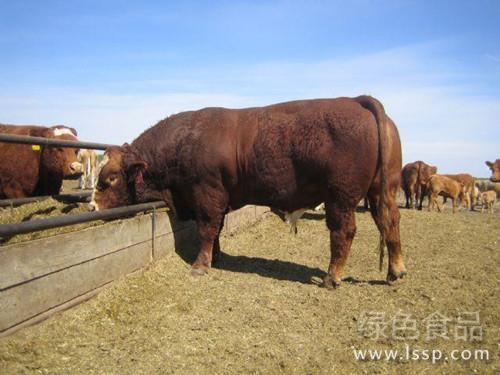
Beef cattle
Select good fattening cattle:
Select crossbred improved bulls such as Charolais, Limousin, and Simmental, healthy and disease-free, weighing more than 250 kg, 1-2 years old and not castrated. Choose beef cattle with bright and spirited eyes, a moist muzzle, a large mouth, a strong appetite, a large feed intake, sturdy limbs, glossy hair, a long body, and a deep and wide chest.
Adjust the cattle barn temperature well:
The cattle barn temperature should be above 5°C. If the temperature is too low, it will affect cattle weight gain, and the cattle will also lose condition. In winter, the cattle barn should be kept warm, covered with plastic sheeting, and gaps in the walls should be blocked with straw or mud, etc., which not only ensures the temperature inside the barn but also facilitates lighting. At the same time, the cattle body itself will not lose too much heat, so the cattle can be fattened normally.
Master the feeding method well:
Before fattening cattle, internal and external parasites should be expelled. Inject 0.2 ml of chongkexing subcutaneously per 10 kg of body weight, or orally administer 0.1 g per kg of body weight; 3 days after deworming, orally administer 350-400 g of Dahuang Quhuo Jianwei San per cow. Ensure sufficient drinking water. Feed should be given coarse first and then fine, and water last. To reduce energy consumption, do not graze, exercise less, keep cattle housed and tethered, feed at fixed times and in fixed amounts, and provide water at fixed times. In winter, provide warm water. The water should be clean and fresh. Let the cattle eat their fill at each meal, especially coarse feed, which should be chopped finely, and the forage should be clean.
Choose a good feed combination:
Feed amounts and combinations should be formulated according to the body weight and weight gain rate of beef cattle, so as to achieve balanced and comprehensive nutrition.
Early fattening stage: distillers' grains 6-8 kg, cornmeal 2-3 kg, soybean meal 0.75-1 kg, salt 50 g, additives 50 g, silaged corn stalks 20 kg. When starting to feed distillers' grains, add a small amount first, and after 10 days of adaptation, gradually increase the feeding amount.
Mid-fattening stage: distillers' grains 10-15 kg, cornmeal 3 kg, soybean meal 1 kg, salt 50 g, additives 50 g, silaged corn stalks 17-20 kg.
Late fattening stage: distillers' grains 10-15 kg, cornmeal 2 kg, soybean meal 0.5-1 kg (or urea 100 g), salt 50 g, additives 50 g, silaged corn stalks 15-20 kg.
Leftover forage and feed must not be kept to the next meal or overnight; distillers' grains must be fresh and high-quality, and spoiled, moldy, frozen, or sand- and soil-contaminated ones must not be fed, to prevent poisoning; if urea is used to replace soybean meal, first dissolve the urea in a small amount of water, mix it into the concentrate and feed it, and it must not be dissolved in water for direct drinking. The urea feeding amount for adult cattle is generally no more than 100 g per head per day, so as to avoid poisoning.
Do a good job in epidemic prevention and sanitary disinfection:
Before fattening, cattle should be vaccinated and injected well. The cattle body should be brushed 1-2 times a day to maintain cattle hygiene; feeding utensils should be cleaned and disinfected twice a day (once in the morning and once in the afternoon). Cattle beds, aisles, and walls should be regularly disinfected with caustic soda or lime, and idle personnel are not allowed to enter or leave the cattle barn.
Choose the best marketing period:
After more than 3 months of fattening, beef cattle are fat and strong, the dressing percentage can reach 58%, the net meat rate can reach 50%, the average daily weight gain can reach more than 1.25 kg, and generally can reach more than 500 kg. If the market price is good, they should be sold quickly to get a good price; otherwise, feeding costs will increase, the weight gain rate will decrease, and economic benefits will be affected.