Nutritional Requirements and Feeding Methods for Breeding Ducks at Different Laying Stages
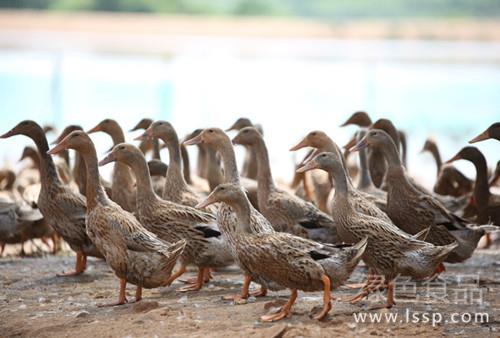
Duck
1. Early laying stage. The female duck flock generally begins laying at 21-22 weeks of age. After laying begins, based on the body weight of the male and female ducks, increase the feed by 5-10 grams per duck per week to encourage the flock to reach a laying rate of 5% as early as possible. However, in practice, some farmers single-mindedly pursue early onset of laying, heavy weight of the first eggs, and an early laying peak, and rapidly increase the feed amount during the early laying stage, which will inevitably affect the benefits of the entire laying period. First, laying too early, combined with overly large first eggs, easily causes prolapse of the oviduct in female ducks; second, the body maturity and sexual maturity of breeding ducks are not synchronized, especially in male ducks, whose semen quality is poor and whose fertilized egg hatchability is low.
2. Early laying period. During the rising phase of laying, feeding should be increased rapidly to induce the flock to reach the laying peak as early as possible. In the 2-3 weeks before the laying peak arrives, the feed amount should reach its maximum; delaying the increase in feed amount will cause a 2-3% loss in laying. At this time, it is necessary to check whether the female ducks' laying rate has reached its peak. Method: adopt a trial feeding increase method, adding another 5-10 grams of feed per duck, and after feeding continuously for 4 days, observe changes in the laying rate. If the laying rate increases, continue feeding according to the increased feed amount; if there is no change, immediately return to the original feed amount. This method can be used multiple times.
3. Laying peak period. In production practice, in order to bring about the laying peak, the maximum feeding amount in the early laying period is generally 10-15% higher than the amount required by this breed of duck at the laying peak. During the entire laying peak period, the feed amount is generally not reduced and is always kept at the highest level. However, after the laying peak is reached, the excess 10-15% of the feed amount must be subtracted; otherwise it will cause the ducks to become too fat, especially male ducks, which will have difficulty mounting or be unwilling to mount, and female ducks will also reduce laying due to becoming too fat. The feed reduction after the peak should be carried out in combination with laying week age, laying rate, and egg weight. Feed reduction should begin 2 weeks after the laying rate no longer rises, generally starting at 21-32 weeks of age. At this time, egg weight should be above 90 grams, and the extent of feed reduction can be larger. The average feed consumption per duck should be reduced by about 10-15 grams, and over 2 weeks, after stabilizing the breeding ducks' feed amount at the required maximum, fixed-quantity feeding should be adopted.
4. Late laying period. After 48 weeks of age, the laying rate of meat ducks begins to decline at a rate of 1-2% per week. Because the female ducks have by then fully matured and egg weight remains correspondingly stable, the female ducks' nutritional requirements begin to decrease. If the feed amount is not reduced at this time, it will inevitably cause fat deposition, making the female ducks too fat, leading to a decline in the late laying rate and causing feed waste. Therefore, starting from 48 weeks of age, feeding should be gradually reduced as the laying rate declines. Feed reduction can also use a trial reduction method: that is, reduce the average daily feed consumption per duck by 5 grams and feed continuously for 4 days. If the laying rate declines greatly during this period, immediately restore the original feed amount; if the decline is normal, feed according to the reduced amount. Repeat this method every 10 days. Under normal circumstances, the daily feed amount for breeding ducks in the late laying period is 80-85% of the feed amount at the peak period.