What are the advantages and effects of bio-organic fertilizer?
What are the advantages of bio-organic fertilizer? How does it differ from chemical fertilizer, organic fertilizer, farmyard manure, and microbial fertilizer? We also ask knowledgeable readers to help explain. Bio-organic fertilizer refers to a type of fertilizer that combines specific functional microorganisms with organic materials mainly derived from animal and plant residues (generally poultry manure and plant straw) that have undergone harmless treatment and composting...
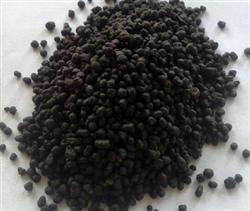 What are the advantages of bio-organic fertilizer? How does it differ from chemical fertilizer, organic fertilizer, farmyard manure, and microbial fertilizer? We also ask knowledgeable readers to help explain
Bio-organic fertilizer refers to a type of fertilizer that combines specific functional microorganisms with organic materials mainly derived from animal and plant residues (generally poultry manure and plant straw) that have undergone harmless treatment and composting, thus possessing the effects of both microbial fertilizer and organic fertilizer. Therefore, Zhongdi Network has compiled the differences between bio-organic fertilizer and chemical fertilizer, organic fertilizer, farmyard manure, and microbial fertilizer, listed in detail below for readers' reference.
Differences between bio-organic fertilizer and chemical fertilizer:
Difference 1: Bio-organic fertilizer has a complete range of nutrient elements; chemical fertilizer contains only one or a few nutrient elements.
Difference 2: Bio-organic fertilizer can improve soil; frequent use of chemical fertilizer can cause soil compaction.
Difference 3: Bio-organic fertilizer can improve product quality; excessive application of chemical fertilizer leads to poor product quality.
Difference 4: Bio-organic fertilizer can improve the rhizosphere microbial community of crops and enhance plants' resistance to pests and diseases; chemical fertilizer makes the crop microbial community monotonous and prone to pests and diseases.
Difference 5: Bio-organic fertilizer can promote the utilization of chemical fertilizer and improve its use efficiency; using chemical fertilizer alone easily causes fixation and loss of nutrients.
Differences between bio-organic fertilizer and refined organic fertilizer:
Refined organic fertilizer is generally commercial organic fertilizer made from livestock and poultry manure, oil cake, cottonseed residues, etc., which are dried, crushed, and then packaged for sale.
Difference 1: Bio-organic fertilizer is completely composted, does not burn roots, and does not rot seedlings; if refined organic fertilizer is not fully composted, it will continue to compost in the soil after direct application, causing seedling burn.
Difference 2: Bio-organic fertilizer has beneficial bacteria added, and due to the colonization effect of the bacterial community, disease occurrence is reduced; refined organic fertilizer may kill all microorganisms inside due to high-temperature drying.
Difference 3: Bio-organic fertilizer has high nutrient content; refined organic fertilizer may suffer nutrient loss due to high-temperature treatment.
Difference 4: Bio-organic fertilizer has been deodorized, has a light smell, and is almost odorless; refined organic fertilizer has not been deodorized and may give off an odor when it absorbs moisture.
Differences between bio-organic fertilizer and farmyard manure:
Difference 1: Bio-organic fertilizer is completely composted, with an egg mortality rate of over 95%; farmyard manure is simply piled up, with a low egg mortality rate.
Difference 2: Bio-organic fertilizer is odorless; farmyard manure has a foul odor.
Difference 3: Bio-organic fertilizer is convenient to apply and uniform; farmyard manure is inconvenient to apply and the fertilizer is applied unevenly.
Differences between bio-organic fertilizer and microbial fertilizer:
Difference 1: Bio-organic fertilizer contains functional bacteria and organic matter, can improve soil and promote the release of nutrients fixed by the soil; microbial fertilizer contains only functional bacteria, and uses functional bacteria to promote the utilization of fertilizers fixed by the soil.
Difference 2: The organic matter in bio-organic fertilizer itself is the living environment for functional bacteria, so they easily survive when applied to the soil; while the functional bacteria in microbial fertilizer may not be suitable for some soil environments.
Therefore, the correct application of bio-organic fertilizer should be combined with a reasonable ratio of compound fertilizer, mineral fertilizer, and microbial fertilizer, so as to complement the shortcomings of a single fertilizer and truly give play to the advantages of various fertilizers.
Methods for making farmyard manure to improve fertilizer efficiency
Why farmyard manure can only be used after composting