Weaned rabbit management affects the survival rate, what should be noted?
To wean young rabbits properly and improve their survival rate, the following steps must be handled well in rabbit raising management:
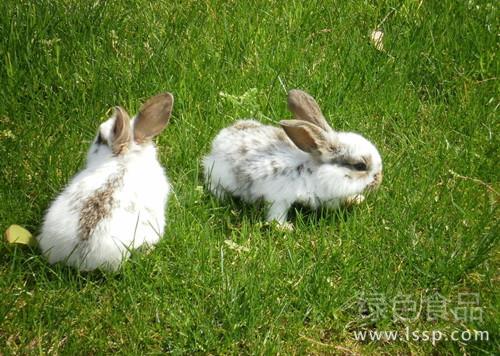
Young rabbits
1. Pay attention to appropriate activity to strengthen the young rabbits' physique.Young rabbits are in a period of body growth, love activity very much, and especially like sunlight. Therefore, young rabbits should have a certain amount of exercise time every day. In spring and autumn, release them from the cage in the morning and return them to the cage in the evening; in winter, release them from the cage at noon and return them before the evening feeding; in summer, release them from the cage at dawn and return them at sunrise. Their activity area should have sunlight, so as to avoid rabbit ringworm caused by dampness, and should also provide shade to prevent heatstroke. Generally, the exercise area should allow 2 young rabbits per sq m. Young rabbits should be basically uniform in size. If individual differences are too great, they should be exercised separately to avoid fights causing injury or death.
2. Provide correct drinking water to promote metabolism.In production practice, a few rabbit raisers mistakenly believe that domestic rabbits do not need drinking water, and even say that drinking water will cause diarrhea in domestic rabbits. In fact, domestic rabbits are very sensitive to water. If drinking water is insufficient and body water decreases by 8%-10%, appetite will decline and digestive function will be hindered, affecting the development of young rabbits; and because the mucous membranes become dry, the disease resistance of young rabbits will be reduced. When body water loss exceeds 20%, it can cause death. This kind of death caused by water shortage is especially common in summer. As for diarrhea in young rabbits from drinking water, it is caused by improper drinking water. Not letting young rabbits drink for a long time and then occasionally giving a large amount at one time causes them to drink excessively, thereby causing digestive dysfunction and diarrhea in young rabbits. Correct drinking method: young rabbits should have water available at all times. Generally, give 0.2-0.4 kg of clean drinking water per kg of body weight per day and night. If feeding green succulent feed with high water content, the amount of drinking water can be appropriately reduced.
3. Persist in reasonable salt supply to improve the appetite of young rabbits.Salt is indispensable for the growth and development of domestic rabbits, especially weaned young rabbits. They need 0.3-1.5 grams of salt per day and night. If the diet lacks salt, the appetite of domestic rabbits will decline, disease resistance will also weaken, causing delayed development of young rabbits and making them prone to illness and death. Therefore, weaned young rabbits should often be fed an appropriate amount of salt, and salt added to compound feed for young rabbits should be controlled at 0.4%-0.6%.
4. Implement scientific feeding.Because weaned young rabbits have just left mother's milk, their living conditions have undergone tremendous changes. At this time, the gastrointestinal digestive function of young rabbits is still very weak. If they eat food that is too hard and difficult to digest, they will die from bloating. In particular, young rabbits weighing about 1 kg are still in the stage of tooth replacement, their tooth roots itch, and they do not know hunger or fullness. Their food intake cannot be self-controlled, which easily causes a thin neck and a large belly, and in severe cases, death from bloating. For this reason, in feeding management, attention should be paid not only to hygiene, but also to feeding fresh, easy-to-digest, highly nutritious concentrate and green feed. Concentrate feed is best cooked. Feed concentrate 2 times a day and green feed 3 times a day. Feed less but add frequently, and by all means avoid overeating.
5. Disease prevention to ensure the health of young rabbits.For weaned young rabbits, achieve early prevention when there is no disease and early treatment when there is disease. There are two diseases that are extremely harmful to young rabbits: one is pasteurellosis, and the other is coccidiosis.