Cold stress in laying hens in winter easily causes frostbite and stops production. How to prevent it?
The optimum temperature for laying hen production is 13-25°C. With the arrival of cold air, the climate becomes cold, and laying hens are susceptible to freezing, resulting in cold stress. Cold stress easily causes the flock's egg production rate to drop by more than 10%, while also inducing respiratory diseases and affecting production performance. If the house temperature is too low, it can also cause frostbite of the comb, wattles and claws, and in severe cases, cause laying hens to stop production or even die. In modern farming, to prevent cold stress, one must start with building standardized chicken houses, improve the flock's constitution, and minimize the impact of cold stress.
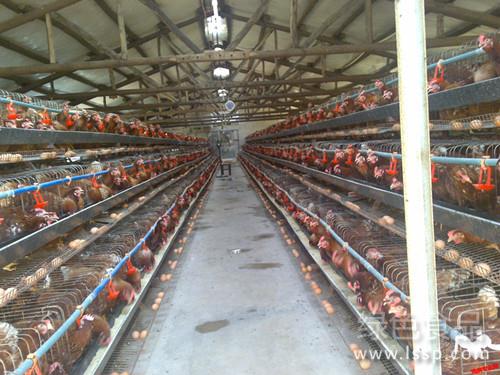
Laying hens
1. Do a good job of keeping the chicken house warm:
When a standardized chicken house is first built, the issue of winter warmth must be considered. After the weather turns cold, the water curtain system of the longitudinal ventilation openings should be sealed with plastic sheeting to prevent cold air from suddenly entering the chicken house. At the same time, air deflectors should be installed on the small ventilation windows on both sides of the chicken house, so that cold air first enters the upper layer of the chicken house, mixes evenly with the warm air, and then slowly descends, reducing the stimulation of cold air on the laying hens.
In addition, observe whether there are other air-leak gaps in the chicken house, and seal all gaps except the air inlets, for example, sealing the outer wall of the small ventilation windows with glass glue; do not neglect to block the manure outlet, where a insert plate made of insulation material can be installed, and the outer side then sealed with insulating black leather, to avoid local low temperatures or short-circuiting of ventilation; at the same time, hang cotton door curtains on the front and rear doors of the chicken house at night to help keep the chicken house warm.
2. Do a good job of ventilation and air exchange:
While keeping the chicken house warm, the contradiction between ventilation and warmth must be coordinated well. Because of keeping warm, the chicken house is often in a sealed state, but since laying hens have a vigorous metabolism, the air in a sealed chicken house easily becomes turbid, and the concentration of harmful gases such as ammonia and hydrogen sulfide increases, causing respiratory diseases and affecting flock health. Insulation and ventilation should be organically combined, promptly removing harmful gases such as ammonia, hydrogen sulfide and carbon dioxide that linger in the chicken house, and bringing in fresh air.
3. Prevent dampness and remove moisture:
Excessive humidity inside the house will reduce the insulation of the feathers, and the wind-chill effect increased by dampness is not conducive to keeping warm, so in winter the chicken house should be kept dry. Reduce sprinkling water on the ground, lower the amount of water used for disinfection with chickens present, and often check the drinking water system to avoid wetting the chickens' bodies and increasing body heat loss; promptly remove chicken manure from the house to reduce the increase in house humidity caused by evaporation of water from the manure. When necessary, place quicklime inside the house to absorb moisture; in addition, when the temperature is suitable, increase the air exchange rate to reduce the humidity inside the house.
4. Increase feed nutrition:
Laying hens have different energy requirements at different house temperatures. To give laying hens good cold resistance in winter, the proportion of high-energy feed should be increased in the feed and the protein content reduced; the amount of feed can also be appropriately increased. Therefore, when raising chickens in winter, pay attention to climate changes. 1-2 days before a cold wave arrives, increase the feed amount by 10-20 grams per laying hen, lasting 3-5 days, which can give the chickens an increase of 112.86-142.12 kilojoules of heat to cope with the cold wave. After the cold wave passes and the temperature rises, immediately restore the original feed amount, so as to avoid the chickens being overweight, which affects egg production. When the temperature gradually drops, for about every 3°C drop, increase the feed by about 5 grams per chicken, so that the chickens have enough heat to maintain body temperature and egg production levels.
In addition, pay attention to the quality and quantity of amino acids. Especially on cold days, to make up for the insufficient energy of commonly used feed, 1% oil can be added to the diet as appropriate, which can both increase feed palatability and help the chickens resist cold, increase egg weight, and improve feed conversion efficiency. At the same time, vitamin C also plays an important role in resisting cold stress. Under cold stress, the vitamin synthesized in the bodies of laying hens cannot meet metabolic needs. Supplementing a certain amount of vitamin C can promote the growth of laying hens and increase egg production and eggshell strength.