Greenhouse goose farming: a shed-based fattening method that reduces the activity of meat geese
In meat geese, the skeleton grows fastest from 2—6 weeks of age, and the muscles from 4—9 weeks of age. Based on this growth pattern of meat geese, fattening them can achieve ideal returns.
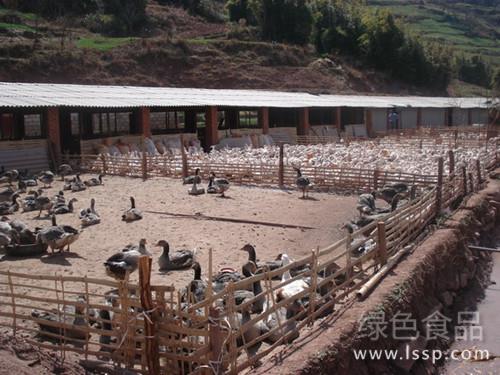
Shed-based fattening of meat geese
1. Shed setup: Build the shed on sloping land near ponds, ditches and similar spots, with feed troughs and water troughs inside, and raise 2-4 growing meat geese per sq m. It can also be run as a large-scale integrated operation with fruit growing and fish farming. The advantage of building a shed is that it reduces the activity of the meat geese, lowers energy consumption and improves feed conversion.
2. Nutritional requirements: At this stage the meat geese grow rapidly and have a strong appetite, and large amounts of coarse feed can be used, so the main composition of the compound feed should gradually transition to 14%-16% crude protein, 12.13 MJ/kg metabolizable energy, 0.9% calcium, 0.6% phosphorus, 0.85% lysine, 0.5% methionine + cystine, and 12.6 mg/kg pantothenic acid.
3. Fattening methods:
Goose farming with grass pulp: Mix collected green feed such as sweet potato vines, water hyacinth, water lettuce, board-leaf and weeds, beat them into a pulp, then stir in compound powder feed, and feed 6 meals a day, with the last meal at 10 p.m.; the green feed used must avoid toxic plants such as sorghum seedlings, oleander leaves and bitter tree leaves.
Dry-mixed compound powder feed: Chop feed such as radish greens, carrots, pumpkin and pumpkin vines, mix with compound powder feed, and feed 6 meals a day, with another meal at 10 p.m.
Pelleted feed and green feed: Place pelleted feed in feed buckets and let the meat geese feed freely, then place green feed on wooden racks, boards, plates and the water surface and let the geese feed freely. Generally each meat goose should be fed 2-4 kg per day. This method suits goose farmers who have large amounts of palatable green feed, such as vegetable-producing areas, and those who grow green feed such as ryegrass in idle winter fields.
Grass-powder complete pelleted feed: Mix grass powder (alfalfa, pine needles, thorny board-leaf, peanut vines and similar, sun-dried or air-dried and made into green powder) with soybean cake, corn and similar to make complete pelleted feed. It can be fed 4 meals a day in pellet trays, or fed all day with automatic troughs or feed buckets, and in addition ensure there is plenty of clean drinking water.
Flexible grazing: If there is grassland nearby, harvested fields, or large amounts of aquatic plants in the water, the geese can also be grazed nearby.
Pay attention to disease prevention: During the growing goose stage, the main concern is preventing digestive system diseases. Biological veterinary drug feeds such as Bacillus licheniformis preparations, probiotics, yeasts and lactic acid bacteria can be used to keep the meat geese's intestines digesting well, and can also prevent and treat diarrhea and enteritis caused by various pathogens. In addition, using some plants that are both feed and Chinese herbal medicine, such as purslane, garlic, guava leaves and ginger, can also achieve prevention and treatment effects.