A sheep's cornea keeps thickening and has white spots - how to prevent and treat keratitis?
Sheep keratitis, also called liver-heat transmission disease, is one of the common and frequently occurring eye diseases in sheep. It is mainly caused by trauma, chemical irritation, or bacterial infection of the corneal epithelium of the sheep's eye. The symptoms and prevention and treatment methods of sheep keratitis are described below:
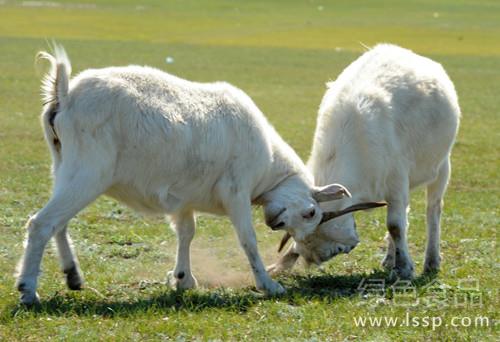
Sheep
1. Symptoms: In mild keratitis, under oblique light, the corneal surface can be found to be rough, and the transparent surface appears pale blue or blue-brown. If caused by trauma, dot-like or strip-like scars can be seen. At the same time, the sheep has symptoms such as pain, tearing, photophobia, eyelid spasm, and decreased vision.
In severe cases, because the inflammation spreads outward, small grayish-white infiltration spots can be seen on the cornea, and even grayish-white cloud-like opacity appears. As the disease course lengthens, the cornea continuously thickens, and a grayish-white shell with clear edges appears, with new blood vessels extending into it from the surrounding area. When the cornea ulcerates, part or all of the vision is lost.
2. Prevention: When sheep suffer from conjunctivitis, treat it promptly to prevent secondary keratitis. Do not graze sheep downwind of areas where pesticides have been sprayed, to prevent pesticides from blowing into the eyes and causing disease. When driving sheep for grazing, prevent mechanical injuries such as whip injuries.
3. Treatment: For mild keratitis in sheep, chlortetracycline hydrocortisone eye ointment can be applied to the eye. To prevent iris adhesion, 1-2% atropine eye drops can also be used intermittently to dilate the pupil, which can achieve satisfactory results. For more severe keratitis, a mixture of penicillin, 1% procaine, and hydrocortisone can be injected once every other day under the bulbar conjunctiva or subcutaneously at the outer corner of the eye, with good results.
For traditional Chinese medicine, Boyun San can be used: calcined calamine 8 qian, borax 3 qian, sal ammoniac 3 qian, borneol 1 qian, coptis 3 qian, green salt 6 qian, bear gall 1 qian, grind together into fine powder, or mix 1 part calomel and 1 part lactose, and blow into the eye, with relatively good efficacy.
When corneal opacity forms a white shell, bite table salt grains into pieces and spray them into the affected eye, once or twice daily, with very good efficacy. Old corneal opacity requires long-term continuous treatment. A 2-5% potassium iodide solution or a mixture of penicillin, procaine, and hydrocortisone can be used for subconjunctival injection. The first dose is 0.2-0.3 milliliters, then once every other day, increasing by 0.1-0.2 milliliters each time, with four or five times as one course of treatment. After stopping the drug for 5-7 days, carry out the first course again. Applying 1% yellow mercuric oxide (yellow precipitate mercury) ointment to the eye also has relatively good efficacy.
After sheep are infected with keratitis, symptoms such as tearing and blurred vision will appear, thereby causing restlessness, difficulty eating, and other conditions in the sheep. Therefore, after discovering that sheep have keratitis, treat it promptly to avoid affecting the growth of the sheep.