Management Measures for Free-Range Laying Hens That Become Thin and Lay Fewer Eggs Due to Low Winter Temperatures
In recent years, because people favor native eggs, more and more farmers have begun raising native chickens free-range. However, temperature and humidity seriously affect the health of laying hens and their egg production. This is especially true in winter, when the chickens lose body heat quickly and feed consumption increases, causing a drop in egg production, thinning of the hens' bodies, and greater susceptibility to disease. Therefore, cold protection and warmth retention for free-range laying hens must be done well in winter. The main measures are as follows:
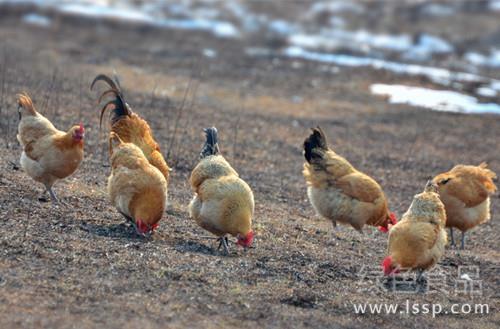
Free-range laying hens
1. Reduce heat loss from the chicken house: For open-style chicken houses, seal the north windows tightly; for enclosed chicken houses, reduce ventilation as much as possible while keeping harmful gases within acceptable limits.
2. Prevent laying hens from lying on damp litter: Lying on damp litter increases body heat loss, so the litter must be replaced often and fresh dry litter added.
3. Prevent cold wind from hitting the chickens' bodies: Cold wind inside the house can come from gaps in doors, windows, and so on, and local wind speed can sometimes reach 4 to 5 m per second, so these gaps must be sealed tightly. Sometimes cold wind comes from the manure trench outlet, so a cold-proof insert board should be installed at the manure outlet. For open-style chicken houses with a run, it is best to set up a windbreak on the northwest side to prevent northwest winds from striking the flock. After winter begins, generally let the chickens out late and bring them in early, shortening the time the laying hens spend outdoors as much as possible.
4. Strengthen flock feeding management: In winter, while ensuring the flock eats enough of all essential nutrients, raise the metabolizable energy level in the daily ration as much as possible, to help the laying hens develop and gain flesh and strengthen their cold resistance. Before turning on the lights in the morning, feed the chickens as fully as possible to shorten the time the flock spends with an empty stomach during the cold night.
5. Prevent water and feed from freezing: Add drinking water frequently and in small amounts, keep water in the trough, and preferably supply warm water, ensuring the drinking water does not freeze. In winter, dry mash feed can be used, and feed should be kept in the trough for eating at any time. If wet feed is given, mix it just before feeding and feed it immediately after mixing to prevent freezing.
6. Raise chickens with deep litter: After disinfecting the chicken house, spread 20 cm of litter at one time, do not replace it normally, and add more as needed depending on how dirty the litter is, until half a year later (after spring the following year) when the weather is warm, then replace it. Benefits of this method: no need to replace the litter or remove manure, which saves labor and can also prevent chickens from catching colds; the litter contains microorganisms, organic matter, and moisture, and fermentation generates heat (the bottom layer can reach above 60°C), so the temperature is stable, saving fuel, lowering costs, and helping keep the chickens warm; the chickens often scratch through the litter looking for food, which promotes movement, strengthens metabolism, and reduces vice habits; because microbial activity in the litter produces vitamin B12, after the chickens eat it, the use of plant protein is promoted, which helps raise the egg production rate. Litter materials can include rice straw, wheat straw, corn stalks chopped with a straw cutter, as well as rice husks, sawdust, grass dust, and so on. The litter must be dry and turned often, mixed with chicken manure, to promote microbial activity and make it ferment, achieving the purpose of deep litter. Raising laying hens on deep litter in the cold season makes the house prone to dampness, and ammonia also increases, which can easily trigger eye disease and respiratory disease. Therefore, attention should be paid to ventilation and air exchange, preventing drinker leakage; at the same time, it is best to feed dry mash.