What should be done if a sow does not eat for a long time before farrowing and has low body temperature, which can easily lead to miscarriage?
If a sow's body temperature before farrowing is below 38.5°C or tends toward normal, and she shows poor appetite, constipation, reduced frequency of urination, a tendency to lie down, reduced feed intake later on, listlessness, refusal to eat, and inability to stand up, then a long period of not eating before farrowing can lead to miscarriage, weak piglets, stillborn piglets, and even the death of the sow and piglets. So how can a sow's loss of appetite before farrowing be prevented and treated?
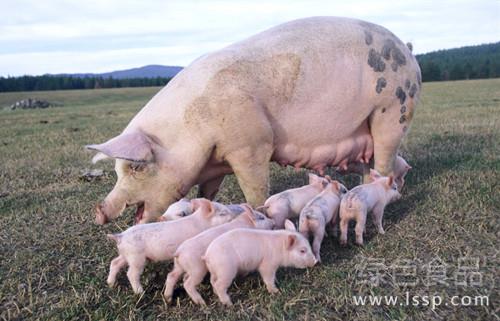
Pig
I. Causes:
1. Insufficient exercise. Sows kept in gestation stalls cannot move normally; especially in late gestation, sows lie down for long periods and are unwilling to move, and the growing size of the fetuses presses on the digestive tract, slowing intestinal peristalsis and causing the sow to stop eating.
2. Insufficient energy. This lowers the sow's resistance, and together with increased stress factors it causes metabolic disorders, making the sow weak and leading to loss of appetite.
3. Insufficient light. In winter the pig house is closed up, pigs get little sunlight, the pen is cold and damp, and sanitation is poor, causing endocrine disorders, which in turn lead to digestive dysfunction and a drop in body temperature.
4. Severely imbalanced nutrient ratios. In particular, severe imbalance of minerals, trace elements and vitamins causes digestive disorders in sows, leading to reduced appetite or pica.
5. Endocrine disorders in sows cause excess internal heat and slowed gastrointestinal peristalsis, leading to constipation.
Preventive measures:
1. Strengthen the management of pregnant sows, especially sows in the perinatal period. Pregnant sows should be fed special feed, and feed must be prevented from going moldy; especially in late pregnancy, sufficient nutrients such as vitamins and minerals must be provided.
2. Strengthen environmental control and reduce cold stress. Pig farms should pay attention to temperature control. In winter, keep them warm and provide a suitable environment for sows.
3. Provide appropriate exercise. Sows can reduce exercise during the first 1-3 weeks after mating and the 1-2 weeks before farrowing, and should be kept quiet to prevent accidental stimulation that could cause miscarriage or premature birth. However, in mid-gestation (from 20 days after mating to 100 days of gestation), sows should have appropriate exercise and light, which is good for fetal development.
Treatment:
1. For pregnant sows with normal body temperature: intramuscular injection of 60 mg progesterone to prevent miscarriage and 10 mL compound VB to improve digestive function and promote appetite, once a day for 2-3 consecutive days.
2. For pregnant sows with low body temperature: (1) First inject 1 g of 10% sodium camphorsulfonate intramuscularly to raise body temperature, and stop using it once the temperature returns to normal. (2) Inject 60 mg progesterone intramuscularly to prevent miscarriage and 10 mL compound VB to improve digestive function and promote appetite. (3) Then give intravenous infusion: 500 mL of 10% glucose solution + 10 mL VC + 600 mg inosine + 40 mg ATP; 500 mL of 0.9% normal saline + ceftiofur (5 mg per kg body weight), once a day for 3 consecutive days, and the sow will recover.
3. Traditional Chinese medicine therapy: take 25 g each of codonopsis, astragalus, cinnamon and prepared aconite, and 15 g each of dried ginger, tsaoko, forsythia and honey-fried licorice, grind them into a fine powder, add 300 g brown sugar and 1 L water, boil down to 500 mL, and after it cools, administer it to the sick pig by drenching. Give once by drenching, 1 dose per day, for 3 consecutive doses. Inject 50 mg adenosine triphosphate intramuscularly, once a day for 3-5 consecutive days.
4. For sows with dry, hard stools and low body temperature: give an enema with soapy water, and after the feces are passed, inject 10 mL compound VB and 1 g of 10% sodium camphorsulfonate intramuscularly, once a day for 2-3 consecutive days. Increase exercise appropriately and feed more green, succulent feed.