Pigeons not eating or drinking and having difficulty breathing, how do you prevent and treat pigeon canker?
Pigeon canker can infect pigeons of all ages, but the younger the bird, the higher the infection rate, the more severe the disease, and the higher the mortality rate. Therefore, when this disease occurs, pay attention to the care, disease prevention, and treatment of young pigeons.
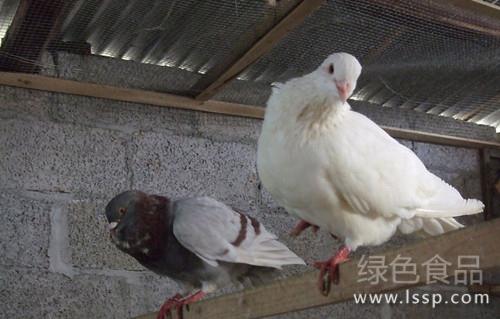
Pigeon
I. Symptoms:
1. Sick pigeons are listless, with the head lowered and neck drawn in, and rough, dull feathers. They stand motionless, close their eyes, are unwilling to move, and eat less. Squab that have just left the nest especially refuse to eat and must be hand-fed. When hand-fed, they are prone to indigestion and food impaction, with a distended crop, slow or arrested growth, and progressive emaciation, and they pass yellow or yellow-green loose droppings.
2. Thirst is increased and water intake rises, and some sick pigeons develop fluid accumulation in the crop. In the early stage of the disease, milky white or yellowish-white spots appear at the corners of the beak and on the mucous membranes of the oral cavity and pharynx. Over time these merge into a white pseudomembrane that protrudes slightly above the skin and mucosal surface and is easy to peel off. Later, a yellow hard scab forms near the corners of the beak.
3. Breathing is difficult, with rales, and the exhaled breath has a foul odor. Some sick pigeons accumulate cheesy or tofu-dreg-like yellow-white material in the oral cavity, especially young pigeons, which is more severe. They often strain to shake their heads, trying to shake out the accumulated material in the oral cavity, and some pigeons even die of suffocation when the accumulated material blocks the throat.
II. Prevention:
1. Move all sick pigeons to another house for isolation, and bury all dead pigeons deep. Thoroughly sweep clean the pigeon house and pigeon cages. Rinse the pigeon house with high-temperature water, then disinfect it with a 2% caustic soda solution. Wash and scrub the pigeon cages with disinfectant. Soak and disinfect the feed troughs and waterers with a 1% potassium permanganate solution, and disinfect with the pigeons present 3 times a week for 14 consecutive days to eliminate pathogenic microorganisms.
2. Strengthen feeding management, improve environmental sanitation, and keep the house ventilated and dry, so as to improve the pigeons' resistance and reduce canker.
III. Treatment:
Peel off the pseudomembrane at the corners of the beak and in the oral cavity, and apply 3% iodine glycerin or gentian violet, 2 times/day for 5-7 consecutive days; inject 2% boric acid solution 3-5 milliliters into the crop, 2 times/day for 3-5 consecutive days; replace drinking water with 0.05% copper sulfate solution for 5 consecutive days. Give Houzining orally, 3 pills/bird•day for 2 consecutive days. Mix poultry multivitamins into the health grit (dosage according to the manufacturer's instructions) for 7 consecutive days. At the same time, add nystatin to the health grit at 20 milligrams/bird•day and feed continuously for 7-14 days.
IV. Expert advice:
At present, most pigeon farms feed raw ingredients, and administering medication mixed into feed is extremely inconvenient. To reduce the workload of treatment while still achieving the therapeutic goal, it is best to add the medication to the health grit according to the dosage, which saves time and effort and gives good results. But note: the amount added to the health grit must not exceed the pigeon's daily food intake, otherwise it will cause waste and still fail to achieve the therapeutic goal.