Which fertilizers cannot be used as seed fertilizer? There is more to choosing a seed fertilizer than meets the eye
Which fertilizers cannot be used as seed fertilizer? What are the reasons? Experienced readers are also asked to help explain. Seed fertilizer is generally applied at sowing or transplanting, placed near the seeds or mixed with the seeds at sowing to supply the nutrients needed for the early growth of the crop; but some fertilizers should not be applied directly near the seeds, to avoid burning or rotting the seeds...
 Which fertilizers cannot be used as seed fertilizer? What are the reasons? Experienced readers are also asked to help explain
Seed fertilizer is generally applied at sowing or transplanting, placed near the seeds or mixed with the seeds at sowing to supply the nutrients needed for the early growth of the crop; but some fertilizers should not be applied directly near the seeds, to avoid burning or rotting the seeds and causing gaps in the rows and missing plants. Therefore, Zhongdiwang has compiled some fertilizers that are not suitable as crop seed fertilizer, listed in detail above for readers' reference.
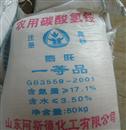
1.Fertilizers that corrode seeds, such as ammonium bicarbonate and ammonia water, are volatile and corrosive, and easily scorch seeds and seedlings. Superphosphate contains free sulfuric acid and phosphoric acid, which can harm seed germination and seedling growth, so it is generally not suitable as a seed fertilizer.
This type of fertilizer should be applied during plowing, or applied in the lower layer of the sowing furrow so that it does not come into direct contact with the seeds, or mixed with soil and farmyard manure before application.
2.Fertilizers toxic to seeds: during the granulation process of urea production, excessively high temperatures produce a small amount of biuret. If the biuret content exceeds 2%, it will be toxic to seeds and seedlings.
In addition, urea molecules with a high nitrogen content penetrate into the protein molecules of the seeds, denaturing the protein and causing toxicity to seed germination and young roots. If urea really must be applied as a seed fertilizer, it must be used under conditions of sufficient soil moisture, and must be kept separate from the seeds, strictly controlled at no more than 5 kg per mu, mixed evenly with fine soil, and spread 2-3 cm below the seeds.
3.Fertilizers containing harmful ions: chemical fertilizers such as potassium chloride and ammonium chloride contain chloride ions. After being applied to the soil, they produce water-soluble chlorides, which are unfavorable to seed germination and seedling growth and can even burn seeds and seedlings; fertilizers such as ammonium nitrate and potassium nitrate contain nitrate ions, which are toxic to seed germination.
4.Strongly alkaline fertilizers: strongly alkaline fertilizers include kiln ash potassium fertilizer and steel slag phosphate fertilizer. Kiln ash potassium fertilizer contains a relatively large amount of calcium and is highly hygroscopic; after absorbing water it releases a large amount of heat, which easily burns seeds and young roots.
If it must be used as a seed fertilizer, it must be fully mixed with more than 10 times its amount of organic fertilizer, applied in the lower layer of the sowing furrow (hole), not allowed to come into direct contact with the seeds, and the soil must be covered promptly after sowing to prevent harm.
5.Unrotted human and livestock manure: using unrotted raw manure as a seed fertilizer, because the fertilizer releases a large amount of heat energy during fermentation, not only easily burns the roots, but the ammonia gas released also scorches the seedlings. Farmyard manure such as human and livestock manure must undergo high-temperature composting and fermentation and be fully rotted before it can be used as a seed fertilizer.
What should be noted when applying fertilizer?
Fertilizers that cannot be mixed and applied together