What are the uses of ammonium chloride? This article explains the main uses in detail
What are the uses of ammonium chloride? How is ammonium chloride best applied? We also ask knowledgeable readers to help explain. Ammonium chloride is a physiologically acidic fertilizer, contains about 25% nitrogen, and appears as white or pale yellow fine crystalline granules or small particles. It has low hygroscopicity, dissolves easily in water, and is easily absorbed by crops. It can be used in agricultural...
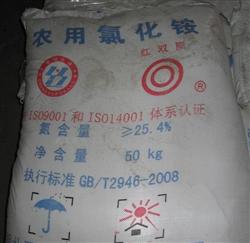 What are the uses of ammonium chloride? How is ammonium chloride best applied? We also ask knowledgeable readers to help explain.
Ammonium chloride is a physiologically acidic fertilizer, contains about 25% nitrogen, and appears as white or pale yellow fine crystalline granules or small particles. It has low hygroscopicity, dissolves easily in water, and is easily absorbed by crops. It can be used as a base fertilizer and topdressing for crops, but is not suitable as a seed fertilizer. Therefore, Zhongdi Network has compiled the application methods and precautions for ammonium chloride, listed in detail below for readers' reference.
Application methods for ammonium chloride:
1. Ammonium chloride used as a base fertilizer:
After ammonium chloride is applied as a base fertilizer, it is best to water promptly so that the chloride ions in the fertilizer are leached down to the lower soil layers, reducing adverse effects on crops. In rainy subtropical regions, when a small amount is used as a base fertilizer, watering is not necessary.
2. Ammonium chloride used as a topdressing:
Ammonium chloride is most suitable as a topdressing for rice. It is more effective than ammonium sulfate with the same amount of nitrogen. However, when ammonium chloride is used as a topdressing, the principle of small amounts applied multiple times should be followed.
3. Ammonium chloride is not suitable as a seed fertilizer or seedling-bed fertilizer:
This is because ammonium chloride forms water-soluble chlorides in the soil, affecting seed germination and seedling growth.
4. Applying ammonium chloride requires covering with soil:
When ammonium chloride is used as a base fertilizer, it should be applied deeply at 10 cm and covered with soil. This helps the soil adsorb and retain the fertilizer and improves nitrogen use efficiency.
Precautions for applying ammonium chloride:
Precaution 1.In arid regions with little rain and in saline-alkali soil, it is best not to apply ammonium chloride or to use as little as possible, to prevent worsening soil salinity damage.
Precaution 2.Ammonium chloride contains 66.3% chlorine. The chlorine brought into the soil is an essential nutrient element for crops, but if excessive, it will have a certain effect on crops. Therefore, it is forbidden to apply ammonium chloride to chlorine-sensitive crops. Chlorine-sensitive crops include tobacco, tea trees, grapes, potatoes, watermelons, sugar beets and other crops. The use of ammonium chloride should also be controlled during the crop seedling stage.
Precaution 3.Ammonium chloride is not suitable as a seed fertilizer, and even more so, ammonium chloride should not be used as a seed-dressing fertilizer, because a large amount of chloride ions near the seeds is harmful to the seeds and will affect seed germination.
Precaution 4.Ammonium chloride is a physiologically acidic fertilizer and should be avoided in mixed use with alkaline fertilizers. Ammonium chloride is generally used on neutral soil and alkaline soil; it should be applied cautiously on acidic soil. When applying ammonium chloride, organic fertilizer can be used together where conditions permit.
Precaution 5.Ammonium chloride should not be applied continuously in large amounts on the same field, and should be applied in combination with other nitrogen fertilizers.
What is calcium cyanamide?
What is calcium ammonium nitrate?