How to respond to extreme cold weather when a cold wave moves south and temperatures drop below zero
Recently, affected by a cold wave moving south, the minimum temperature in many places in the south has dropped to nearly minus 8 to 9°C. Experts remind fish farmers: in low-temperature extreme cold weather, pay close attention to the weather and take good measures to protect fish ponds against the cold.
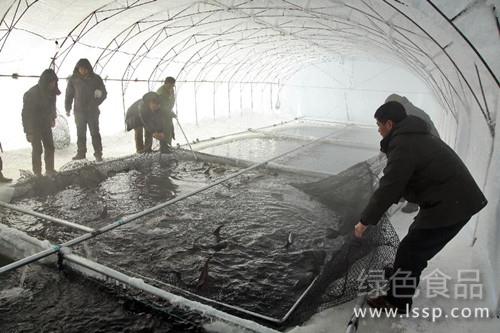
Winter fish farming
1. Deepen the pond water level as much as possible to prevent fish from being frostbitten due to water that is too shallow. When the pond water level drops greatly and the pond water is too shallow, the water temperature is prone to dropping sharply. Therefore, add new water in time. On the one hand, this can ensure that the pond water body has a suitable water level and water temperature; on the other hand, it can improve water quality and increase dissolved oxygen in the water. However, when adding new water, be careful not to let the new water form two layers and create double-layer ice, as this can easily cause severe oxygen deficiency under the ice and cause fish to suffocate.
2. Pay attention to pond freezing. Once freezing is found, break the ice to allow oxygen through, and shorten the freezing period of the water body as much as possible. Before the pond surface freezes, determine whether to fill or drain water according to the water temperature of the water source and the water temperature of the aquaculture water body, and try to ensure that the water body has a relatively high water temperature and delay the time when the water surface freezes.
3. On heavy snowy days, do not seine and harvest too much. If seining is necessary, do it quickly to reduce fish injuries. During the overwintering period, fish rarely feed or stop feeding, their activity decreases, their metabolic level decreases, their growth rate slows, and their disease resistance declines. Excessive seining can easily cause damage to the fish body, and the fish surface is prone to infection with saprolegniasis.
4. Pay attention to the safety of fishery facilities: remove snow promptly from greenhouse plastic sheds and ordinary simple houses to prevent collapse from too much accumulated snow; for pond aquaculture, check whether the inlet and drainage channels are unobstructed; for greenhouse soft-shelled turtle and tropical ornamental fish farming, pay attention to pipeline safety and prevent gas, power, and water outages caused by freezing.
5. Increase the number of pond patrols and pay attention to observing the activity of aquatic products. During heavy snow periods, appropriately increase pond patrols and do a good job in cold prevention and overwintering work. During the overwintering period, as long as the water level is deep enough (2.5 to 3 m), the four major Chinese carps can overwinter safely. However, some tropical and subtropical fish, such as freshwater pomfret, Egyptian catfish, and tilapia, will be frostbitten and may even die in large numbers when the water temperature is below 10°C. They should be kept warm in greenhouses, plastic sheds, or by using waste heat from geothermal factories. Therefore, once abnormal fish activity is found, take measures in time.