What to do when cow's milk is pale red or blood red? Prevention and treatment methods for blood milk disease
Blood milk disease in dairy cows refers to a disease caused by many factors after calving. The symptom is that the milk secreted by the cow contains a pale red or blood red color, and it requires timely prevention and treatment. The prevention and treatment methods for blood milk disease in dairy cows are provided as follows:
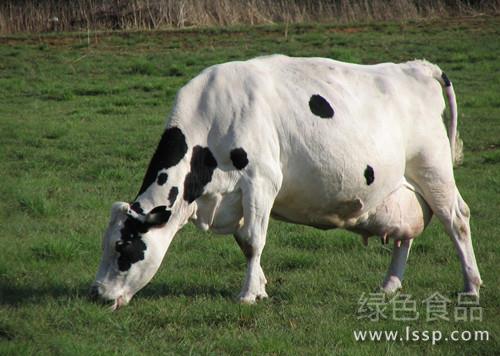
Dairy cow
After a dairy cow calves, the udder is severely edematous, and during movement or lying down it is often squeezed by the hind limbs; when dairy cows enter or leave the barn, they crowd each other; sudden slipping on hard ground; broken bricks, stones, tiles, frozen manure blocks, etc. in the exercise yard can all cause mechanical damage to the udder, causing blood vessels in the udder to rupture, blood to enter the milk, and the appearance to be pale red or blood red, which is dairy cow blood milk disease.
Diagnostic points: blood milk suddenly appears, the dairy cow's udder is swollen, with a slight feeling of heat. During milking, there is slight pain, the cow is restless and avoids it, the systemic reaction is mild, and spirit, appetite, and lactation are normal.
Prevention and treatment measures: strengthen care for the sick cow, reduce the feeding amount of concentrated feed and succulent feed, and restrict drinking water. Keep the udder clean, and strictly prohibit massage and hot compress on the sick cow's udder. To recover as quickly as possible, hemostatic drugs can be used: intramuscular injection of etamsylate 10 to 20 milliliters; intramuscular injection of agrimony extract injection 30 to 40 milliliters once, 2 to 3 times per day; intramuscular injection of carbazochrome injection 20 milliliters (containing carbazochrome 100 milligrams) once, 2 to 3 times per day. To prevent secondary infection, intramuscular injection of penicillin 2.5 to 3 million international units once, twice per day, for 3 consecutive days. At the same time, management should be strengthened, the exercise yard should be kept dry and flat, bedding straw should be spread in winter, and sand and soil should be spread at ordinary times, to reduce the effect of adverse factors on the dairy cow's udder.