How to give emergency rescue to a piglet that is apparently dead, has stopped breathing, but still has a faint heartbeat
In pig farming, there is often a phenomenon in which newborn piglets have stopped breathing but the umbilical cord and heart still have slight pulsation, showing an apparently dead state. Causes of apparent death in piglets: the sow is too fat, the piglet stays too long in the birth canal, and mucous and amniotic fluid block the trachea. So how should apparently dead piglets be rescued?
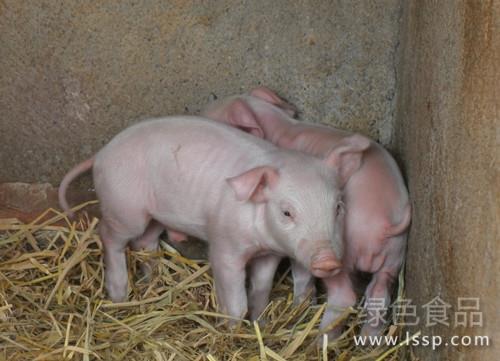
Piglet
1. Wipe away the mucous from the mouth and nose, hold the piglet upside down and slap its rump (in winter, place it in warm water at 40~41°C for 1~3 minutes with the head exposed), then dry it; in summer, spray the pig's body with cool water.
2. Apply alcohol to the nose of the apparently dead piglet to stimulate it, which can also revive it.
3. Perform artificial respiration: place the apparently dead piglet on straw or a cloth, hold the forelimbs with your hands, flex and extend them back and forth, and gently press the ribs and chest with your palms, or blow air into the piglet's nostrils to restore breathing.
4. Face one palm toward the top of the piglet's head, clamp the jaw open with the index finger and thumb, keep the other three fingers against the cheek, open the mouth, and pick up the piglet. Then place the piglet's mouth facing the operator's mouth at a distance of two cun, shape the operator's lips into a tube, and blow forcefully into the piglet's mouth about ten times; some pigs can then resume breathing and slowly begin to move. If this does not work, blow forcefully about ten more times, then place the piglet on its side on rice straw; massage the piglet's chest, and some piglets can be saved.
5. Breath-holding method: press the piglet's mouth, nose, and anus with your hands, and pinch the piglet's umbilical cord with your fingers to hold its breath. When pulsation is felt in the umbilical cord, release immediately, which can revive the piglet.
6. For piglets that are apparently dead due to chilling, quickly place them in water at 35°C with the head exposed, and keep moving them, then gradually raise the water temperature to 38~40°C. After the warm water bath, dry the body, which can help promote breathing.
7. If an individual piglet is found with the amniotic membrane not yet ruptured, the keeper should immediately tear the amniotic membrane open by hand and release the amniotic fluid to prevent the piglet from suffocating to death.