Prevention and Treatment Methods for Fat Cow Syndrome with Complete Loss of Appetite and Ineffective Drug Treatment
Fat cow syndrome is in fact a metabolic disorder in cows caused by long-term nutritional imbalance combined with the stress of calving. Once the disease occurs, treatment results are poor, so comprehensive prevention and treatment measures must be adopted. Fat cow syndrome is often caused by improper feeding and management, such as a single feed variety, too much concentrate, lack of roughage, insufficient exercise, etc.; mixed-group housing with rations not adjusted according to physiological stage; and during the dry period, feed energy being too high, causing disorders of digestion, metabolism, reproduction and other functions. Symptoms are divided into acute and subacute.
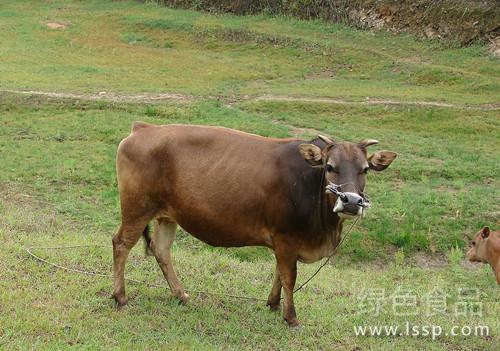
Cow
Acute: The cow becomes ill following calving, with complete loss of appetite, little or no milk, cyanosis and yellow staining of visible mucous membranes, body temperature of 39.5°C to 40°C, stiff gait, dull gaze, and weak response to the external environment. In those with diarrhea, yellow foul-smelling loose feces are passed, with no response to drugs. After 2 to 3 days of illness, the cow lies down and cannot rise, and may even die.
Subacute: Mostly occurs 3 days after calving, mainly manifesting as ketosis, with reduced or complete loss of appetite, a sudden drop in milk production, scant and dry feces, ketone odor in the urine, positive ketone body reaction, accompanied by mastitis, retained placenta, uterine atony, accumulation of brown foul-smelling lochia in the birth canal, ineffective drug treatment, lying down and unable to rise, groaning, and teeth grinding.
Prevention and treatment measures: prevention first, comprehensive prevention and treatment.
1. Strengthen feeding and management, and supply balanced rations. Restrict the amount of concentrate for dry cows and increase the amount of hay fed. House cows in separate groups, feeding dry cows and lactating cows separately.
2. Strengthen health checks for cows. Strengthen prepartum and postpartum health checks for cows, establish a ketone body monitoring system, and detect sick cows early. Any cow with a positive ketone body reaction should be treated immediately. Regularly supplement sugar and calcium. For old, high-yielding cows with poor appetite and a history of ketosis, inject 500 milliliters each of 20% glucose solution and 20% calcium gluconate solution intravenously 1 week before calving, supplementing 1 to 3 times.
3. Timely breeding. Breed cows in a timely manner, do not miss any cow in estrus, improve the conception rate of cows, and prevent obesity caused by an overly long dry period.
4. Drug treatment. The purpose of drug treatment is to inhibit fat decomposition, reduce the accumulation of fatty acids in the liver, accelerate the decomposition and utilization of fat, and prevent concurrent ketosis. Its principles are detoxification, liver protection, and sugar supplementation. Each cow can be given an intravenous injection of 500 to 1000 milliliters of 50% glucose solution, or an intravenous injection of 50% dextran, 1500 milliliters for the first time, then changed to 500 milliliters, 2 to 3 times a day. Nicotinic acid can also be given orally, 12 to 15 grams per cow each time, once a day, for 3 to 5 consecutive days. Propylene glycol can also be given orally, 170 to 342 grams per cow each time, twice a day, for 10 consecutive days. To prevent secondary infection, broad-spectrum antibiotics can be used, such as 2 to 2.5 million international units of chlortetracycline or tetracycline, injected intravenously once, twice a day.