Prevention and treatment methods for hepatobiliary syndrome in tilapia caused by streptococcosis
Streptococcosis can cause hepatobiliary syndrome in tilapia, but hepatobiliary syndrome in tilapia can be caused by multiple factors; the following is a categorized discussion.
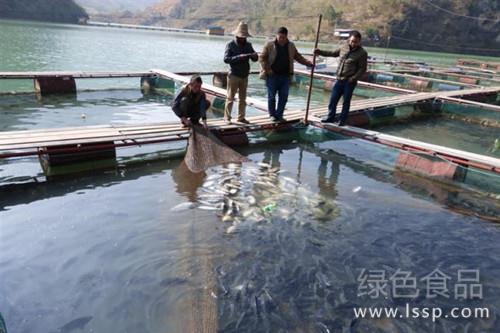
Tilapia farming
Prevention and treatment of streptococcosis:
1. Advocate ecological farming and healthy farming. Fish ponds that have been used for many years need to have the pond bottom turned and pushed over so that harmful substances can be oxidized. When stocking fry, the stocking density should be reasonable: for the GIFT series, stock 1200 fish/mu—1500 fish/mu; for the Oni series, stock 1200 fish/mu—1800 fish/mu; do not overcrowd. Strengthen daily monitoring, regularly check tilapia activity, feeding and other conditions, and when tilapia with streptococcosis are found, carry out timely prevention and treatment. Keep water quality good, change water frequently, and disinfect regularly.
2. When dead or sick fish are found, first stop feeding the feed; after one or two days: oral administration: vitamin C, mixed into 0.2—0.3 grams/kg feed, 10% florfenicol, mixed into 1 gram/kg feed, or norfloxacin raw powder, 1 gram/kg feed, administered continuously for 5—7 days, for better effect. At the same time, disinfect the water body; disinfect the water body with 8% chlorine dioxide powder, 2 mu/kg—3 mu/kg, once every other day, for 2 consecutive times. When water quality is poor, increase the use of aerators or use biological agents to regulate it, and keep water quality good.
Prevention and treatment of hepatobiliary syndrome:
1. Scientific management to reduce disease. Add substances that help improve tilapia immunity to the feed, such as vitamin C, E and other additives, so that through the tilapia's daily feeding, absorption and utilization, the fish's disease resistance is naturally improved and disease occurrence is reduced. At the same time, during the farming process, strengthen management, change water at the proper time, feed reasonably, reduce water pollution, and adjust the water body to a fertile, active, tender and refreshing state to achieve a preventive effect. In the later stage of farming, especially in mixed-culture ponds, regulate water quality and reduce the hepatobiliary burden of tilapia by reducing feeding and using a feed-control method of stopping feeding for 1 day every 10 days.
2. Drug treatment. Compound Chinese herbal medicines such as Sanhuang powder, vitamin C, isatis root, Xihuangcao, and Hedyotis diffusa can be used. It is recommended to mix 0.5 kg each of licorice, Sanhuang powder, and isatis root, and mix into 80 kg of feed. Use continuously for 5—7 days, and tilapia with mild disease will improve markedly. When water quality is poor, be sure to control feed first, then carry out water purification, disinfection or detoxification treatment, and at the same time administer Chinese herbal medicines orally.
3. When detoxifying water quality, alum and ferrous sulfate can be used together as a mixture, with a fairly obvious effect. In water body disinfection operations, chlorine dioxide has a fairly obvious effect, and can reduce ammonia nitrogen and nitrite.
4. Strengthening water quality management, paying attention to feed control, and carrying out Chinese herbal health care can effectively prevent hepatobiliary syndrome in tilapia.