Calves are weak and have poor resistance; their care and management require the "three preventions" and "five attentions"
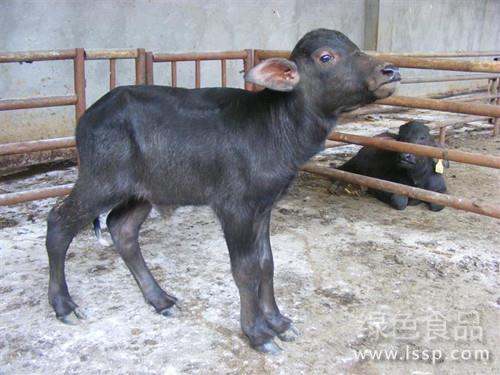
Calves
I. Care: implement the "three preventions":
1. Prevent suffocation. If the cow has difficulty calving, the calf may suffocate in the mother's body because mucus and amniotic fluid block it for a long time. In mild suffocation, breathing is weak and rapid; if it lasts a little longer, cyanosis of the mucous membranes can be seen, the tongue hangs outside the mouth, the mouth and nose are full of amniotic fluid and mucus, the heartbeat and pulse are fast and weak, and only the cornea still shows a reflex. In severe suffocation, the calf stops breathing, the mucous membranes are pale, the whole body is limp, reflexes disappear, no pulse can be felt, and only the heartbeat can be heard, appearing as if dead.
When a calf is suffocating, artificial respiration can be performed: lower the calf's head and raise the hindquarters; 1 person holds the calf's two forelegs and pulls them back and forth, alternately expanding and compressing the chest cavity, while another person uses gauze or a towel to wipe clean the mucus and amniotic fluid from the calf's nostrils and mouth. When performing artificial respiration, be patient until normal breathing appears. At the same time, drugs that stimulate the respiratory center can also be used as an adjunct.
2. Prevent constipation. This condition means the calf does not defecate within 24 hours after birth, and may arch its back and raise its tail as if trying to defecate. In severe cases, there is abdominal pain, poor appetite, and a fast, weak pulse. A rectal examination can reveal dry, hard fecal masses.
When a calf becomes constipated, promptly give an enema with soapy water to soften the feces so it can be passed. Rectally infuse 300 milliliters of vegetable oil or liquid paraffin; hot compresses and abdominal massage can also be used, or wrap the calf's abdomen with a large towel, etc., to keep it warm and reduce abdominal pain.
3. Prevent omphalitis. Omphalitis is an inflammation caused by bacterial infection of the severed end of the umbilical cord after the calf is born. When palpating the calf's umbilical area, there is pain, and a cord-like structure can be felt under the skin at the center of the umbilical cord and its root, with thick, foul-smelling pus flowing out. In severe cases, the swelling often extends to the surrounding abdomen; the calf is depressed, has reduced appetite, elevated body temperature, faster breathing and pulse, and local warming of the umbilical cord area.
Prevention and treatment methods: if the tissue around the umbilical opening is inflamed, first clip the hair around the umbilicus and disinfect it, then inject penicillin procaine injection subcutaneously at points around the umbilical opening, and apply pine tar oil and 5% iodine tincture, etc., locally. If there is an abscess and necrosis, the pus should be drained, the necrotic tissue removed, and after cleaning with a disinfectant solution, sprinkle on antibacterial and anti-inflammatory drugs such as iodoform sulfonamide powder or furacilin powder, and bandage the area well.
II. Management: implement the "five don'ts":
1. Do not neglect disinfection. Calves have weak resistance, and neglecting disinfection will give pathogens an opportunity. Therefore, after a calf is born, caustic soda and limewater should be used to disinfect the floor, walls, railings, feed troughs, etc. Once a month in winter and 2~3 times a month in summer. If an infectious disease is found, the environment and tools contacted by sick and dead cattle should be thoroughly disinfected.
2. Do not provide insufficient drinking water. After a calf is born, the cow's milk cannot meet the calf's normal metabolic needs. Therefore, after the calf is born, the cow must be supplied with sufficient clean drinking water. Even during lactation, the cow must also be given sufficient drinking water.
3. Do not keep the pen dirty. Clean the pen regularly, and brush the cattle body 1~2 times a day to ensure the calf is not contaminated by sewage or manure and to reduce the occurrence of disease.
4. Do not let it lick randomly. After each feeding, the calf's mouth and nose should be wiped clean to prevent it from licking its nose and developing a licking habit. For calves that have already formed a licking habit, a small wooden board can be put in front of the bridge of the nose to correct it.
5. Do not restrict exercise. Calves are in a period of growth and development, and increasing exercise can strengthen the calf's physique. Do not restrict their exercise for fear that calves will run and dash about.